Establishing California Natives in Fall: Initial Watering Rules
New California natives need more than a “drought-tolerant” label during their first weeks in the ground. Their roots are still adjusting, and fall weather can swing from warm, dry days to rain. The reliable approach is to water the root ball thoroughly at planting, then check soil moisture and adjust to the plant, soil, and weather.
Water thoroughly at planting, then check the root ball
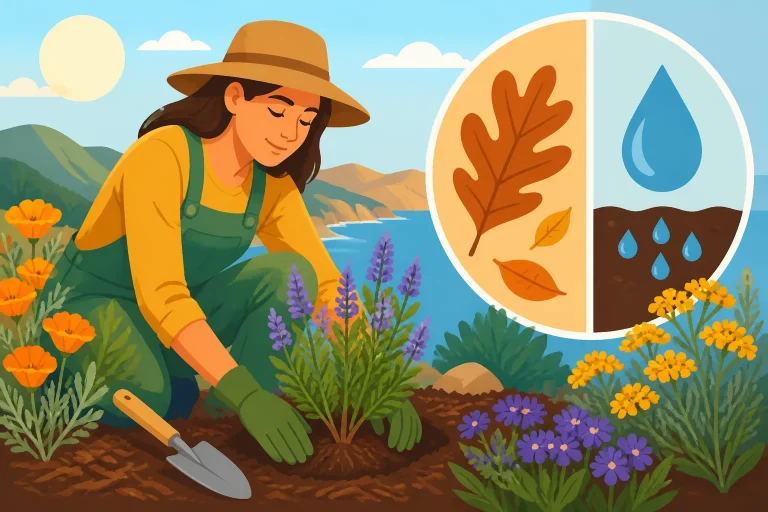
Watering at planting settles soil around the roots and helps eliminate large air pockets. It does not mean keeping the entire bed constantly wet. The immediate goal is to moisten the nursery root ball and the surrounding soil without leaving them waterlogged.
Before planting, make sure the root ball is moist. A very dry nursery pot can be difficult to rewet once planted, while a saturated one may already be short of air. If the soil is dry, water the plant in its container and let excess water drain before setting it in the ground.
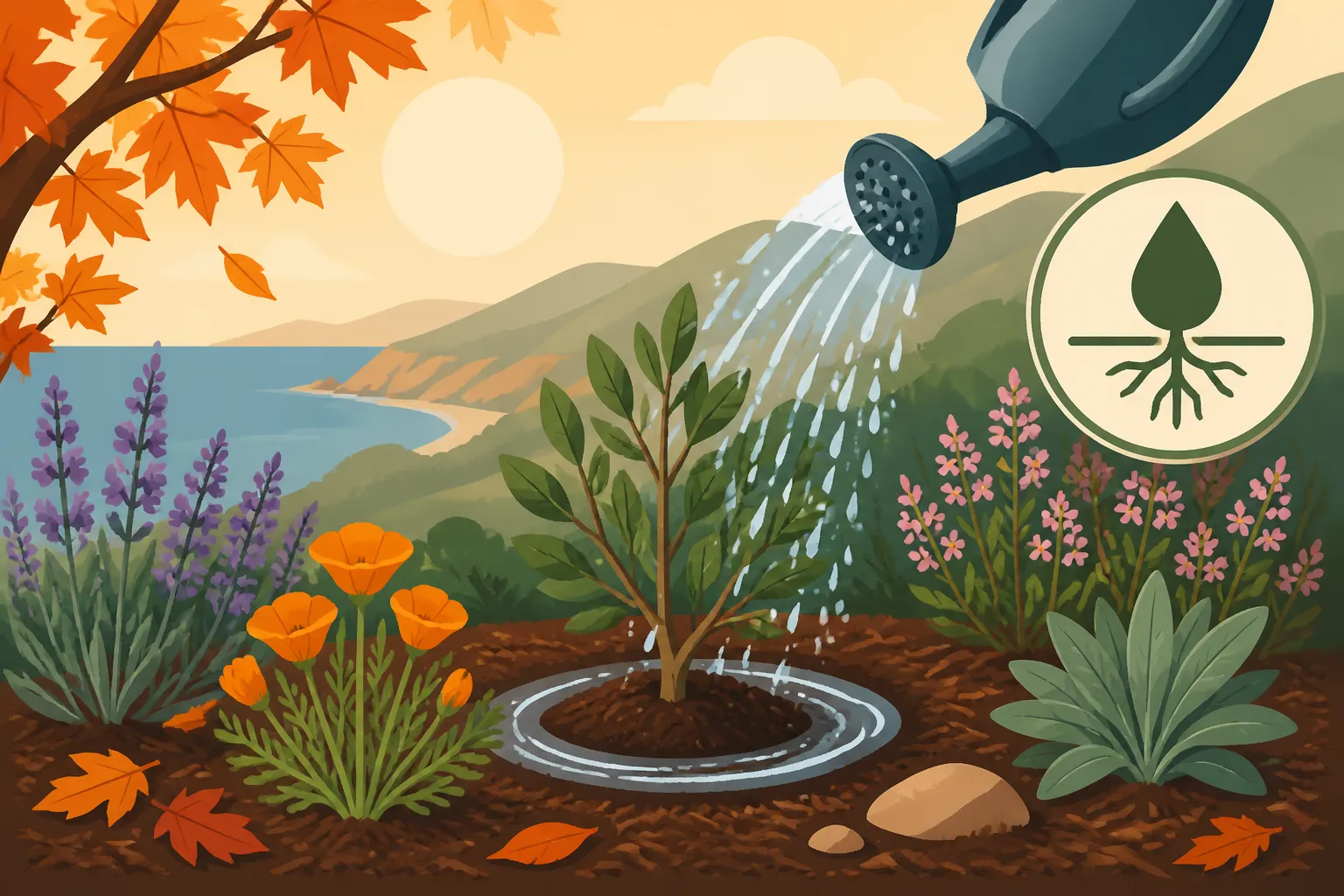
After planting, apply water slowly at the base of the plant. A gentle flow or a watering can is easier to control than a forceful stream, which can expose roots or wash soil away. Water until the root ball and the soil directly around it are wet. Then pause and check: water should move into the soil rather than immediately run downhill or collect at the surface.
A small watering basin can help keep water near the roots, particularly on a gentle slope. Shape it so water stays around the plant, not against its crown or stem. On a steep slope, a basin may not hold water safely or effectively; a slow application in more than one pass may be more useful.
Newly planted roots are concentrated in and near the original root ball. That creates a common problem: the surrounding garden soil can feel moist while the root ball remains dry, or the root ball can be wet while compacted soil around it stays saturated. Check both places rather than relying on the surface appearance of the bed.
For a practical overview of the first watering after planting, see Deep Watering Intervals for Newly Planted Native Shrubs. For planting timing and fall moisture considerations, see Planting California Native Plants in October: Timing and Moisture.
Adjust follow-up watering to weather, soil, and plant needs
There is no single fall watering interval that works across California. Coastal fog, inland heat, mountain cold, local rainfall, soil texture, slope, and the plant’s natural habitat all affect how quickly the root zone dries. A newly planted native in a sunny, exposed bed may need attention sooner than one in cool shade, but shade does not make saturated soil safe.
Use soil checks to decide whether to water again. Feel the soil in the root ball and just beyond it, a short distance below the surface. If it is still damp, wait and check again later. If it is drying, water slowly enough to moisten the root zone. Do not judge only by a dry-looking surface: the upper layer can dry while deeper soil remains moist.
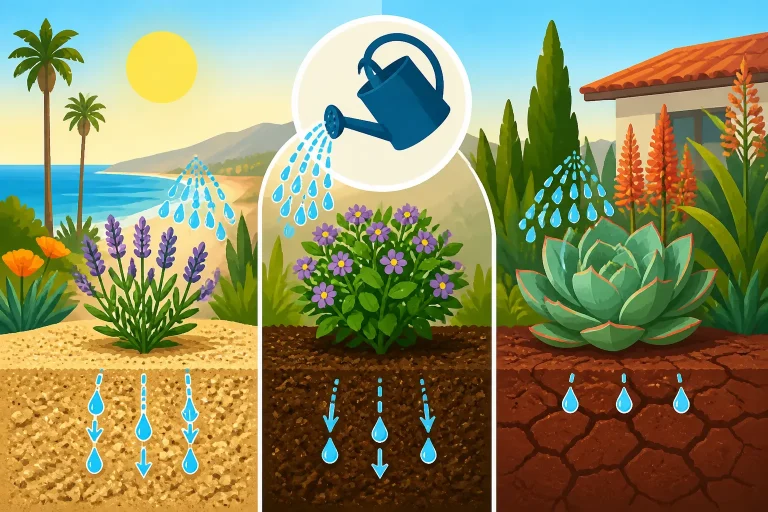
| Site or soil condition | What to watch for | Practical response |
|---|---|---|
| Sandy or coarse soil | Water drains quickly; the root ball may dry before nearby soil | Check moisture more often and apply water slowly so it can soak in |
| Heavy clay | Water may spread slowly, pool, or run off; soil can stay wet long after the surface dries | Apply gradually, allow time to infiltrate, and avoid watering again while the root zone remains saturated |
| Sloped or exposed bed | Water can move downhill, and wind or sun can increase drying | Apply in controlled passes and check moisture near the root ball |
| Cool, shaded site | Soil may stay moist longer | Check before watering rather than following a fixed routine |
| Warm, sunny site | The surface and root ball may dry sooner | Check more frequently during dry, warm weather |
| Rainy period | Rain may wet only the surface or may soak the root zone, depending on the storm and soil | Check below the surface before deciding whether supplemental water is needed |
Soil texture is one important part of the decision. Matching California Garden Watering to Sand, Loam, and Heavy Clay explains how texture changes water movement, while How California Clay Soils Affect Irrigation Depth and Runoff covers challenges specific to heavy clay. If the bed is sandy, Watering Sandy California Soils: Frequency vs Moisture Limits offers more detail on balancing quick drainage with root-zone moisture.
The plant matters as much as the soil. A small, shallow-rooted plant and a larger shrub will not necessarily use water at the same pace. A species from a dry, open habitat may have different needs from one adapted to a moist woodland setting. Group plants with broadly similar water needs where possible, and check care guidance for the particular species rather than assuming every California native should be treated alike.
Also account for the condition of the plant at purchase. A root-bound plant may have a dense mass of roots that sheds water or dries unevenly. A plant that has been stressed in its container may need closer observation after transplanting. Loosen tightly circling roots carefully when appropriate, and make sure the root ball is fully wetted at planting.
Keep the root zone moist without keeping it saturated
The distinction between “moist” and “wet” matters. A new plant needs water available to its roots, but roots also need air in the soil. Frequent watering that leaves the root zone continually saturated can contribute to root decline, especially in poorly drained soil. On the other hand, letting a fresh root ball dry out repeatedly can stress a plant before its roots have grown into the surrounding soil.
A good routine is based on inspection, not a calendar:
- Check the root ball and surrounding soil below the surface.
- If the root zone is still moist, wait rather than watering automatically.
- If it is drying, apply water slowly around the root zone.
- Check again after watering to confirm that water reached the root ball and did not simply run off or pool.
- Adjust your next check based on the weather, soil, and how quickly the bed dried.
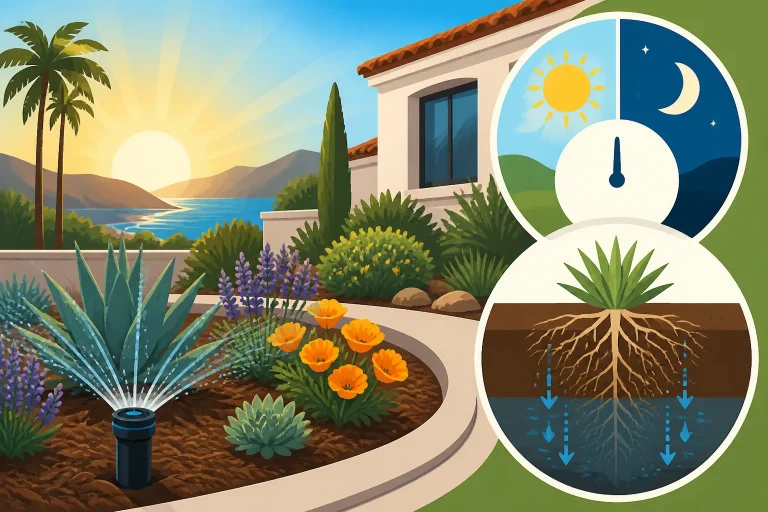
For drip irrigation, place emitters where they wet the root ball and the nearby soil, not just a patch several inches away. As roots expand, the wetted area may need to expand too. A timer can be useful, but it should not make the decision for you: the same setting can overwater clay in cool weather and underdeliver to a fast-draining root ball in warm weather. Adjusting California Drip Timers for Soil Texture and Roots explains how to think through that setup.
If water runs off before it soaks in, stop and let the soil absorb what has already been applied. Then resume at a slower pace. Repeating a short application after a pause can be more effective than leaving a hose running over compacted or sloping ground. If water pools and remains there, do not add more simply because the surface farther from the plant looks dry.
A mulch layer can reduce surface evaporation and moderate soil temperature, but it cannot replace checking the root zone. Keep mulch away from the plant’s crown and stem so moisture does not stay pressed against them. Leave enough room around the base to inspect the soil and see whether water is reaching the root ball. For material and placement details, see Mulching California Native Plants: What to Use and What to Avoid.
Avoid making a planting basin so deep that water collects around the crown. A low, broad basin that guides water toward the root zone is generally easier to manage than a tight depression against the stem. In slow-draining soil, use extra care: if the area stays soggy after irrigation or rain, adding water can worsen the problem rather than help the plant.
Respond to California’s uneven fall weather
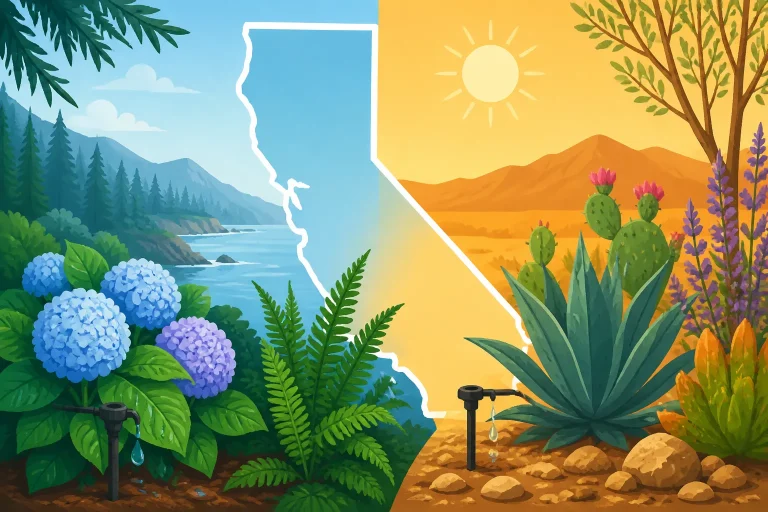
“Fall” does not mean the same conditions everywhere in California. Some locations receive meaningful rain early in the season; others stay dry well into winter. Inland heat can persist after planting, coastal fog can reduce drying, and higher-elevation sites may turn cold before the soil has been regularly wetted by rain. A forecast of rain is not proof that the root ball has received enough water.
After a light shower, check the soil. Rain may wet mulch and the top layer without reaching the plant’s root ball. A longer rain may soak the root zone, but heavy clay, compacted ground, and slopes can change where the water goes. Use the same below-surface moisture check you would use after irrigation.
During a warm, rainless stretch, keep checking newly planted natives even if the calendar suggests watering less in fall. Sun, wind, and high temperatures can dry a small root ball quickly. If the soil is drying, water it; if it remains moist, wait. The point is to respond to conditions rather than to follow a fixed seasonal switch.
When rain becomes consistent, reassess supplemental irrigation instead of turning it off automatically at the first storm. Check whether rainfall is wetting the root zone, and watch for both dry pockets and prolonged saturation. Irrigation needs can also vary across one yard: a sheltered bed under an eave may stay dry while a nearby open bed gets soaked.
If you use drip irrigation, adjust the timer when conditions change and verify the result in the soil. A timer can deliver water regularly even when rain has made it unnecessary. It can also run too briefly to wet the root ball, or place water where the plant cannot reach it. When to Resume Garden Irrigation in Spring Across California discusses seasonal irrigation decisions later in the year; the same principle applies in fall: use soil conditions, not a date alone.
New natives may need supplemental water through their first dry season, and some take longer to establish than others. That does not mean watering them on the same schedule forever. As roots grow into surrounding soil, gradually reassess how quickly the root zone dries and whether irrigation is still needed. The pace of that change depends on the species, site, soil, and weather.
Troubleshoot stress before adding more water
Wilting is a signal to investigate, not an automatic instruction to water. A plant can wilt in hot weather even when the soil is wet, and a root system damaged by excess moisture may be unable to take up water normally. Before irrigating a wilted native, check the root ball and nearby soil.
If the root ball is dry, apply water slowly and make sure the water reaches it. If the soil is already wet, adding more may deepen the problem. Look for other clues: water pooling after irrigation, a persistent sour or stagnant smell, declining leaves despite wet soil, or a planting area that remains saturated. These signs call for a closer look at drainage and irrigation rather than more water.
If only one plant is struggling, compare its location and soil moisture with nearby plants. It may sit in a hotter, windier pocket, in the path of a sprinkler, under an eave that blocks rain, or in a low spot that collects runoff. A plant that is stressed soon after planting may also have root damage or may be poorly matched to the site. Why Drought-Tolerant Plants Die in California Gardens covers common causes beyond insufficient irrigation.
Do not use foliage appearance alone to set a watering routine. Leaf curl, droop, discoloration, or leaf drop can have several causes, including transplant stress, heat, drainage problems, and pests. Start with observable conditions: moisture in the root ball, moisture around it, how water moves through the bed, and recent weather. If the problem persists, consult a reliable local resource or a professional familiar with California native plants.
A simple record can help. Note when you planted, whether the soil was wet or dry at each check, whether rain reached the bed, and how the plant responded. You do not need a complicated log; even a few observations can reveal that one area dries quickly while another remains damp. Use those patterns to refine irrigation, then keep checking as the season changes.
Frequently Asked Questions
Should I water a California native immediately after planting?
Yes. Water slowly at planting to moisten the root ball and the soil around it, and to settle soil around the roots. Avoid forceful watering that exposes roots or washes soil away.
Should I water new natives every day?
Not automatically. A fixed daily routine may keep some soils too wet and leave other root balls inadequately moistened. Check below the surface and water when the root zone is drying.
Can fall rain replace irrigation?
Sometimes, but not always. A light shower may wet only the surface, and rain can miss plants under eaves or other cover. Check the root ball and nearby soil after rain before deciding.
How long do new native plants need supplemental water?
It depends on the species, soil, site, and weather. Some plants need supplemental water during their first dry season, while others may take longer to establish. Reduce irrigation based on observed soil moisture and growth, not a fixed cutoff date.
Disclaimer
This article is for general informational purposes only and does not constitute professional advice. Laws, prices and regulations vary by location and change over time. Consult a qualified professional for guidance on your specific situation. California Gardening Guide is not a government agency and is not affiliated with any university extension, state department of agriculture or other government agency.