Why Last Spring Freeze Dates Are Guides Rather Than Deadlines
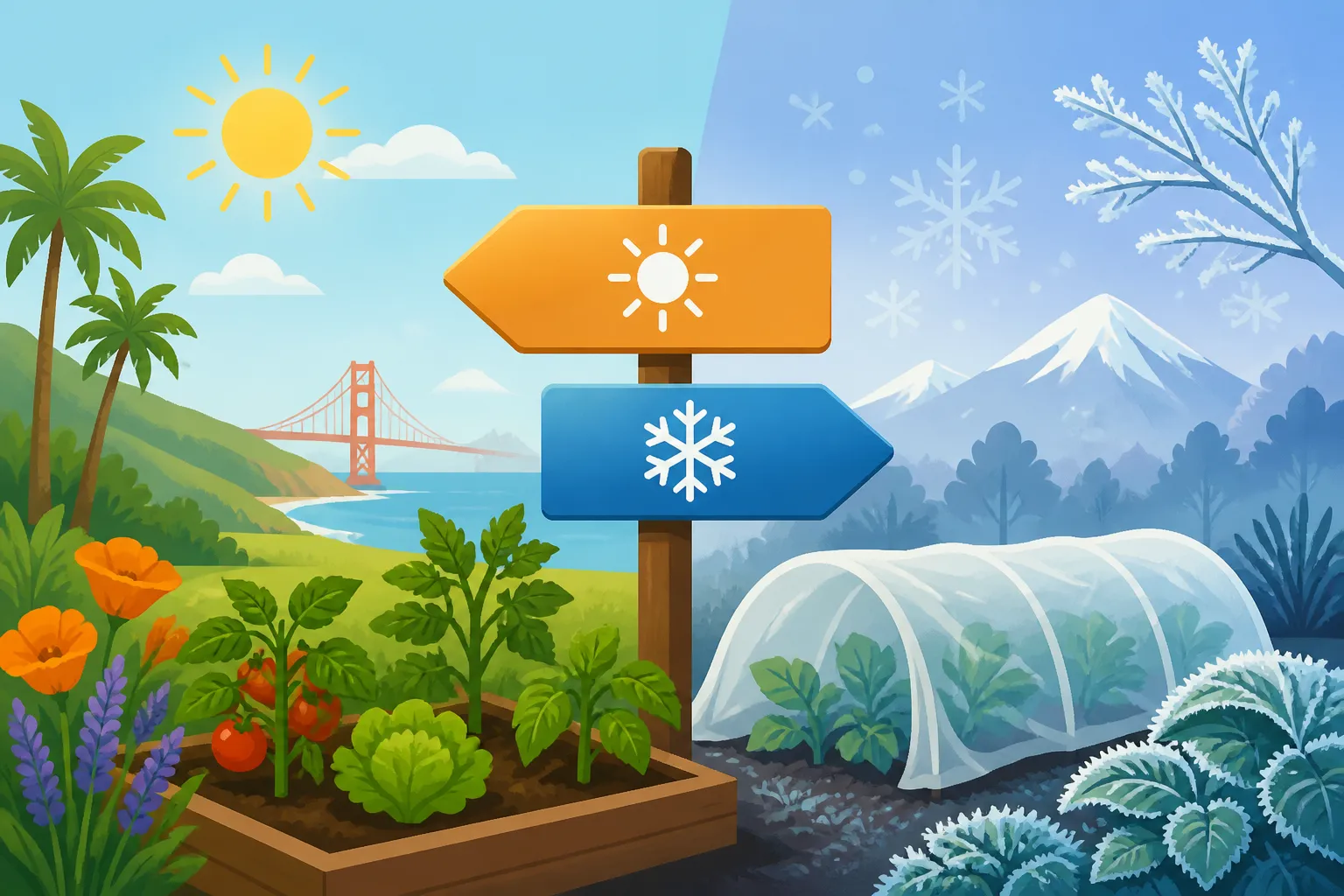
A last spring freeze date can help you plan, but it cannot tell you exactly what will happen in your yard this season. California’s coast, valleys, deserts, foothills, and mountain areas have different conditions, and even nearby garden beds can cool differently. The useful approach is to treat a date as one planning clue, then adjust for local weather, plant sensitivity, and the shelter your site provides.
What a last spring freeze date tells you
A last spring freeze date is a summary of past weather or a probability-based estimate for a place or weather station. It helps describe when freezing conditions have tended to become less likely in spring. It does not predict the weather in a particular garden on a particular night.
The word “last” can make the date sound final, as if the risk ends at a calendar boundary. In practice, it means the last freeze in a period of recorded or estimated conditions, or a date associated with a stated probability. A date based on a higher probability of avoiding a freeze will generally be more cautious than one based on a lower probability. Neither removes the possibility of an unusually late cold night.
The exact meaning depends on the source. A calendar may use a weather station’s historical records, a regional estimate, or a probability threshold. Those are not interchangeable. Before using a date, check what location it represents, what period it covers, and whether the probability is stated. A station may be useful as a regional reference while still differing from the conditions in your own yard.
A date also does not describe every kind of cold exposure. A forecast low, a frost on a car roof, a patch of frost on a lawn, and a damaging freeze in a garden bed are related signs, but they do not necessarily mean the same thing for plants. Cold air can settle in some places while slopes or sheltered areas remain warmer. A forecast for a nearby town may not capture those differences.
For gardeners, the date is best used to organize decisions rather than make them automatically. It can help you decide when to start watching forecasts closely, when to prepare covers, or when to consider planting a crop that tolerates cool conditions. It is not a guarantee that tender plants are safe outdoors, nor a reason to delay every planting until the same date.
Regional timing still matters. California planting calendars can help you narrow down a broad window, but they cannot account for every yard’s elevation, exposure, drainage, or nearby structures. If you are comparing calendars, Understanding California Frost Dates and Growing Seasons can help put date estimates in context, while Choosing the Right Local Sowing Calendar in California can help you look for a regional reference that better matches your location.
The same caution applies to hardiness zones, which describe a different aspect of climate. The USDA Agricultural Research Service describes hardiness zones as general guides for growing perennial plants, not guarantees of plant survival. A hardiness zone is not a spring freeze forecast, and neither a zone nor a freeze date can replace attention to local conditions.
Why a calendar date cannot promise a frost-free spring
Spring weather is variable. A mild stretch can encourage buds and seedlings to grow, then be followed by a cold night. A season that has been warm overall can still include a damaging late cold spell. A date can summarize typical conditions, but it cannot prevent these shifts or tell you which pattern this spring will follow.
Forecasts and averages answer different questions. A historical average tells you what conditions have tended to be like over a chosen period. A probability date describes how likely a particular event is relative to that source’s records or method. A short-term forecast addresses expected conditions over a nearer period. None is a substitute for the others. A sound planting decision uses the calendar to plan ahead, then uses current forecasts as planting approaches.
There is also a difference between the temperature measured at a weather station and the temperature experienced by a plant. Stations follow particular siting and measurement practices. A garden may have a different exposure, surface, slope, or airflow. If the station is far away or located in a different landscape, its records may provide a broad clue rather than a close match.
Cold events are not always uniform across a region. A cold air mass can affect a wide area, but local terrain can shift where the cold settles. A low area may collect cool air while a nearby slope drains it away. A wall or dense planting can reduce airflow in one location, while an open yard is more exposed. These effects can make a single regional date feel too early for one garden and too late for another.
Dates also vary with the chosen probability. A source that gives different probability levels is showing different ways of expressing risk, not competing promises. A cautious gardener may prefer a date that leaves more room for late cold. Someone willing to protect plants or accept occasional losses may choose a less conservative window. The appropriate choice depends on the plant’s sensitivity, the value of the planting, and the gardener’s tolerance for risk.
A useful way to read a date is: “Around this part of spring, the chance of a freeze may be changing, so I should pay attention.” It is not: “After this day, a freeze cannot happen.” That distinction is important when deciding whether to set out tender transplants, sow heat-loving crops, or remove protection from young plants.
For more on how probability affects practical planning, see How to Read NOAA Freeze Probabilities for Garden Sowing and Can Average Frost Dates Mislead California Sowing Schedules?. These topics are especially useful when a calendar shows a date without explaining what probability or record period it represents. If a source does not clearly explain its method, use its date cautiously rather than treating it as a precise forecast.
Why plants respond differently to the same cold night
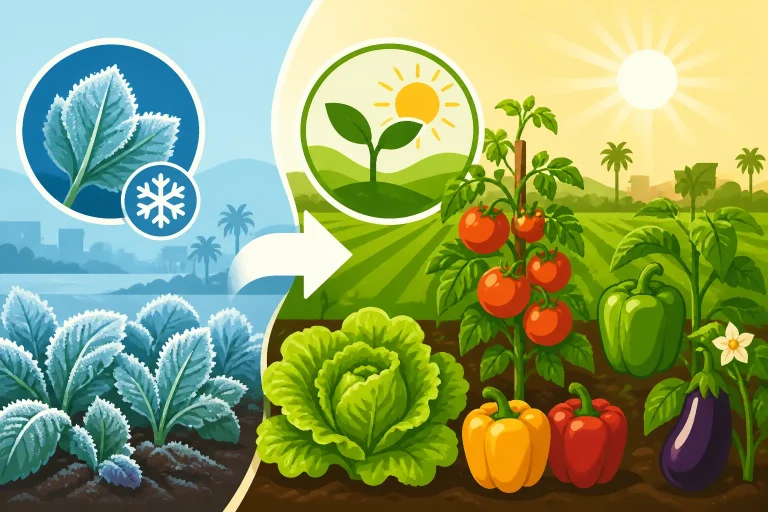
Even if the weather is the same across a garden, plants do not all respond in the same way. A cool-tolerant crop may continue growing through conditions that injure a tender crop. A seedling may be more vulnerable than an established plant. New growth, flowers, buds, and fruit can be more sensitive than older, hardened foliage.
The plant’s stage of growth matters. A seed in the soil is not exposed in the same way as a leafy transplant. A plant that has been growing in a protected indoor or greenhouse setting may be less prepared for outdoor conditions than one that has gradually adjusted to them. A flowering plant can have vulnerable blossoms even when its stems and leaves appear healthy. This is one reason a single date cannot serve as a universal “safe to plant” signal.
Crop type matters too. Cool-season vegetables and many hardy landscape plants can tolerate cooler conditions better than warm-season vegetables and other frost-sensitive plants. But “cool-season” does not mean immune to all cold, and “warm-season” does not mean that every plant in the category has identical needs. Variety, age, health, soil moisture, wind, and duration of exposure can all affect the outcome.
Plants also respond to the way they were raised. Seedlings moved directly from a sheltered environment into outdoor sun, wind, and cool nights may experience stress even when the air temperature does not cause obvious frost injury. Gradual adjustment helps them adapt to outdoor light and air movement. This process is known as hardening off. It does not make a tender plant frost-proof, but it can reduce the shock of changing growing conditions. For a practical look at the transition, see Hardening Off Seedlings: Sun and Heat Protection in California.
Planting decisions also differ by crop and method. Direct-sown seed may be less exposed to a brief cold event than a tender transplant, but germination depends on suitable soil conditions. A transplant can give a crop a head start, yet it may need protection if cold returns. The choice between seed and starts is not just about the calendar; it is about the crop’s preferred conditions, the soil, and the protection available. Direct Seed or Transplant? Timing Your California Garden explores those trade-offs.
Flowers and fruit can make cold injury especially frustrating. A plant may survive a cold spell but lose blossoms or young growth, reducing the harvest or bloom that follows. A gardener may then see a healthy-looking plant and assume the cold had no effect, even though a sensitive stage was damaged. Conversely, a plant may show temporary leaf damage but recover if its growing points remain healthy. The visible response depends on species and the part of the plant exposed.
That is why a planting calendar should be crop-specific. A broad garden date cannot tell you when every vegetable, flower, shrub, or fruit tree is ready for the same exposure. Check the needs of each plant, and separate planting decisions into groups: crops that tolerate cool conditions, crops that need warmer soil and nights, and plants that need protection if a late cold event occurs.
When in doubt, consider the consequence of being wrong. If a few seedlings are easy to replace, you may accept more risk. If a plant is expensive, slow to establish, or carrying a valuable early crop, a cautious planting window and a protection plan may be worth the wait. The best date is not necessarily the earliest possible date. It is the date that fits the plant and the amount of risk you are prepared to manage.
How your California yard can differ from a regional date
A weather station or regional calendar represents a location or broad area. A backyard contains smaller conditions that can shift how quickly it warms or cools. These local differences are often called microclimates. They may be created by terrain, buildings, paving, trees, fences, soil, or the way air moves through the yard.
Start by noticing where cold tends to linger. Low spots can collect cool air, especially when the surrounding ground slopes toward them. A garden on a gentle slope may have better cold-air drainage than a bed at the bottom of a hollow. The effect is not guaranteed, and steep or exposed sites can have other challenges, but observing where frost appears first can reveal useful patterns.
Structures and hard surfaces influence nearby conditions. A wall may shelter a bed from wind or release stored warmth after sunset, depending on its material, orientation, and exposure during the day. A paved area can warm quickly in sun, but it can also leave nearby plants exposed to heat and reflected light. A fence may provide a windbreak while limiting airflow. These features can create a pocket that behaves differently from the rest of the yard.
Vegetation creates its own mix of shelter and shade. A tree canopy can reduce direct exposure to open sky, while dense shrubs may slow airflow. Those conditions may be useful in some situations and problematic in others. Shade can delay soil warming, and dense cover can hold moisture. A spot that seems protected on a calm night may still be exposed to cold air moving in from elsewhere.
Soil and drainage are part of the picture. Beds that remain wet, compacted, or slow to drain can behave differently from well-drained beds, particularly when growth is slow or roots are stressed. Raised beds may warm sooner in some conditions, but they can also lose heat or moisture more quickly than soil at ground level. Containers are even more exposed to changing temperatures than in-ground roots. None of these features gives a reliable frost forecast by itself; they are reasons to observe your own site rather than assume every bed matches the regional date.
Keep a simple record through the season. Note where frost appears, which beds are exposed to wind, where soil warms first, and which areas stay damp or shaded. Record what was planted and how it responded to a cold spell. A few seasons of observation can help you make better choices than a generic date alone, especially if the same patterns recur.
You can also compare your observations with a nearby forecast and the nearest relevant weather-station data. If the forecast suggests a cold night, check vulnerable beds rather than assuming the entire property will have identical conditions. The goal is not to measure every corner precisely. It is to identify places that regularly need earlier protection or a more cautious planting window.
Microclimates can shift planting opportunities as well as freeze risk. A warm, sheltered bed may be suitable for planting sooner than an exposed bed, while a shaded or foggy location may warm more slowly. Navigating Microclimates Across California Hardiness Zones explains why broad climate labels can miss neighborhood-scale differences. For timing crops in places with contrasting coastal and inland conditions, Coastal Fog Versus Inland Heat: Timing California Planting Windows offers a useful comparison.
Do not assume a warm pocket is always safer. It may warm early, encouraging new growth that is more vulnerable if cold returns. It may also be more exposed to wind or reflected heat. Treat local observations as evidence to combine with forecasts, not as a substitute for them.
How to use the date when planning sowing and transplanting
The most practical way to use a last spring freeze date is to build a flexible plan around it. Begin with the plant’s needs, then use the date to frame a period when you should watch conditions. Make the final decision using the current forecast, the soil, the plant’s stage, and the protection you can provide.
| Garden decision | How the last spring freeze date helps | What to check before acting |
|---|---|---|
| Sowing cool-tolerant crops | Offers a broad seasonal reference | Crop needs, soil condition, and current weather |
| Transplanting tender seedlings | Signals when close forecast monitoring becomes important | Plant hardiness, recent outdoor adjustment, and protection options |
| Planting warm-season crops | Helps indicate that spring cold risk is changing | Soil warmth, night conditions, and the crop’s preferred growing conditions |
| Removing covers | Helps you plan when to reassess protection | Short-term forecast, plant sensitivity, and local yard conditions |
| Planting valuable or slow-growing plants | Encourages a cautious schedule | Cost of loss, establishment needs, and whether protection is practical |
First, identify the crop and the vulnerable stage. A crop grown for leaves may respond differently from one grown for flowers or fruit. A newly emerged seedling may need different care from a sturdy transplant. Read the seed packet or plant information for the crop’s preferred conditions, and do not assume that a date designed for frost risk also confirms that soil and air conditions are suitable.
Second, decide what kind of risk matters. For a crop that tolerates cool weather, a late cold night may be a manageable concern. For a tender crop, a freeze could set it back or kill it. If you are not sure how sensitive a plant is, check a reliable crop-specific growing reference rather than guessing from a broad calendar.
Third, look at the conditions that affect establishment. Soil that is cold, saturated, dry, or poorly prepared can slow growth even when frost is not expected. A plant that is stressed after transplanting may be less able to recover from a sudden change in weather. Good planting conditions are more than a date; they include a suitable site, prepared soil, appropriate moisture, and a plant ready for the transition.
Fourth, check the near-term forecast as planting gets closer. A long-range date cannot tell you whether a cold spell is approaching. If the forecast raises concern, consider waiting, protecting the planting, or choosing a less sensitive crop. A forecast is still uncertain, so keep watching it as conditions change rather than making a one-time decision far in advance.
Fifth, leave room to adjust. You can plant the less-sensitive crops first, keep tender starts protected, or stage planting across different beds. Staggering planting dates spreads risk and can make the garden easier to manage. It also avoids placing every vulnerable plant outdoors at once just because a regional calendar lists a favorable window.
A local sowing calendar can help you organize those choices, especially when it distinguishes among regions and crop types. California Sowing and Transplanting Calendar by Region can provide a starting point, while Adapting Local Planting Calendars for Yard Microclimates is relevant when your garden differs from the regional conditions described. Use either as a framework, then check the crop-specific advice and current weather.
If you are deciding between sowing directly and transplanting, consider both cold exposure and establishment. Direct sowing avoids the shock of moving a seedling but depends on soil conditions that allow seed to germinate and grow. Transplanting can give you a more developed plant, but a young start may be vulnerable to a sudden cold or a sharp change in sun and wind. Neither method is automatically safer. The choice depends on the crop and the conditions you can provide.
Keep a backup plan for important plantings. That could mean retaining extra seedlings in a protected place, having covers ready, or delaying a portion of the planting. A backup does not need to be elaborate. It simply prevents a single uncertain date from deciding the fate of the whole garden.
How to prepare for a late cold forecast
A date is most useful when it prompts preparation. You may not need to protect plants every spring, but it helps to know which plants are vulnerable and what you can do if a cold night is forecast. Decide in advance which beds matter most, what materials are suitable, and how you will keep protection from harming the plants.
Protective covers can reduce exposure when used appropriately. The covering should be placed so it shields the plant without crushing delicate growth, and it should be secured against wind. The choice of material and setup matters; a cover that touches tender foliage may not provide the same protection as one supported above it. Some materials trap heat better than others, while others may be useful mainly as a barrier against wind or light frost. Follow product guidance where applicable, and remove or adjust covers when conditions change so plants are not left shaded, overheated, or poorly ventilated.
Water and soil conditions deserve attention too. Avoid making assumptions based only on whether the soil surface looks dry. A plant under stress may respond poorly to multiple stresses at once, but watering practices should match the crop, soil, and conditions. Do not overwater a bed in an attempt to prevent cold injury; waterlogged soil can create its own problems. Checking Topsoil Moisture Before Midsummer Yard Irrigation focuses on a different season, but the broader habit of checking soil rather than relying only on a schedule is useful in garden management.
Moveable containers offer some flexibility. If a container plant is vulnerable and a suitable sheltered location is available, moving it can reduce exposure. However, a sheltered location may not be appropriate if it is dark, hot, or poorly ventilated for an extended period. Containers also respond quickly to changes in temperature and moisture, so check them after a cold spell rather than assuming the roots experienced the same conditions as in-ground plants.
Do not prune, fertilize, or otherwise force tender growth simply because a calendar date has passed. New growth can be more exposed than established growth, and routine care should be based on the plant’s condition and needs. If a freeze has already occurred, wait until the extent of injury is clearer before removing damaged growth. Some plants recover from damage that initially looks severe; others may have losses that become apparent later. The right response depends on the plant.
After a cold event, inspect plants methodically. Look for changes to leaves, buds, flowers, and growing tips. Compare affected plants with similar plants in more sheltered parts of the yard. Avoid making a firm judgment from a single symptom: wilting or discoloration can have several causes, and cold may not be the only stress. If damage is extensive or the cause is unclear, use a plant-specific diagnostic resource or ask a qualified local gardening professional.
Protection also has trade-offs. Covers take time to set up and remove, can be displaced by wind, and may create unsuitable conditions if left in place. Moving containers may protect them from cold but expose them to other stresses. Waiting to plant can reduce risk but may shorten the time available for a crop to grow. Choose a response that fits the plant and your ability to monitor it.
A practical plan can be simple:
- Identify which plants would be most damaged by a cold night.
- Keep suitable covers or a sheltered location available before the forecast becomes urgent.
- Check the forecast and your garden’s colder spots as the weather approaches.
- Protect only the plants that need it, and secure coverings appropriately.
- Recheck plants after the event before removing damaged growth or changing care.
The purpose is not to eliminate all risk. It is to avoid being caught off guard by a late cold event that a calendar date could never promise would not happen.
Build a planting calendar that can change
A useful garden calendar is a working plan, not a fixed schedule. It should combine regional timing with what you know about your own yard and the needs of the plants you want to grow. Keep the plan flexible enough to shift when spring is unusually cold, when forecasts change, or when the soil is not ready.
Start by separating plants into broad sensitivity groups. You might keep cool-tolerant crops, plants that need warmer conditions, and especially vulnerable starts in different parts of your plan. This is more useful than giving every crop one shared planting date. Crop groups still contain variation, so use the broad categories as an organizing tool rather than a replacement for crop-specific information.
Next, identify your reference point. If a calendar gives a last spring freeze date, find out whether it refers to a nearby station, a regional area, or a particular probability. If it does not explain that information, treat the date as a rough guide. Compare it with the conditions in your yard and with other regional guidance, but do not average different dates together as if they used the same method.
Add observation to the plan. Note when a bed first receives direct sun, where cold air seems to settle, which areas stay damp, and where wind is strongest. Record when you plant and what happens afterward. If an exposed bed repeatedly suffers cold injury while a sheltered one does not, make that difference part of next season’s plan.
Use a forecast check as a decision point rather than waiting for the calendar to settle the question. As planting approaches, ask whether the forecast supports the choice, whether the soil and plants are ready, and whether you have a response if cold returns. If one answer is uncertain, adjust the plan. That may mean waiting, planting a less-sensitive crop, protecting a tender one, or dividing the planting across more than one date.
For a garden with several distinct areas, keep separate notes. A warm wall-side bed, an open vegetable patch, a low spot, and a patio container may not share the same planting window. There is no need to create a complicated system: a simple map with observations can prevent you from treating the entire property as a single climate.
Also remember that spring timing is only one part of the season. Soil warming, day length, wind, moisture, pests, and summer heat all affect what grows well. A plant that survives a late freeze may still struggle if it is planted in conditions it does not prefer. A good calendar considers the growing conditions after planting, not only the last date associated with spring cold.
When comparing advice, look for the assumptions behind it. A city-wide calendar may be a useful starting point, but it may not fit a yard on a slope or in a sheltered coastal pocket. A planting recommendation for a broad region may not reflect an unusually cool spring or a warm winter. If advice conflicts, check whether it is discussing the same crop, planting method, location, and level of cold risk.
A flexible plan makes it easier to make decisions without overreacting. One cool forecast does not necessarily mean the whole season is delayed, and one warm spell does not prove that the risk is over. Consider the trend, the specific plant, and the conditions on your site. Make the smallest adjustment that addresses the actual risk rather than resetting the entire garden schedule.
The central idea is straightforward: use a last spring freeze date to orient your planning, not to certify that the garden is safe. Pair it with crop-specific guidance, local observation, and current forecasts. Then decide how much risk is acceptable for each planting. That approach is more useful than trying to find a single date that works for every plant and every California yard.
Frequently Asked Questions
Does a last spring freeze date mean there cannot be another freeze afterward?
No. It is a planning reference based on historical or probability-based information, not a promise about the coming season. A late cold event remains possible.
Should every crop wait until the same date?
No. Crops differ in cold tolerance, and seedlings, flowers, and new growth may be more vulnerable than established plants. Use crop-specific guidance rather than one date for the whole garden.
Why might my yard have frost when the nearby forecast does not mention it?
A forecast represents an area, while a garden has local features such as slopes, low spots, walls, and sheltered or exposed beds. Those features can create conditions that differ from the broader forecast.
Is a hardiness zone the same as a last spring freeze date?
No. A hardiness zone describes perennial-plant climate suitability in a different way. It does not tell you whether a freeze will occur in your garden this spring.
Sources
- USDA Agricultural Research Service — How to Use the Maps | USDA Plant Hardiness Zone Map (checked November 14, 2026)
Disclaimer
This article is for general informational purposes only and does not constitute professional advice. Laws, prices and regulations vary by location and change over time. Consult a qualified professional for guidance on your specific situation. California Gardening Guide is not a government agency and is not affiliated with any university extension, state department of agriculture or other government agency.