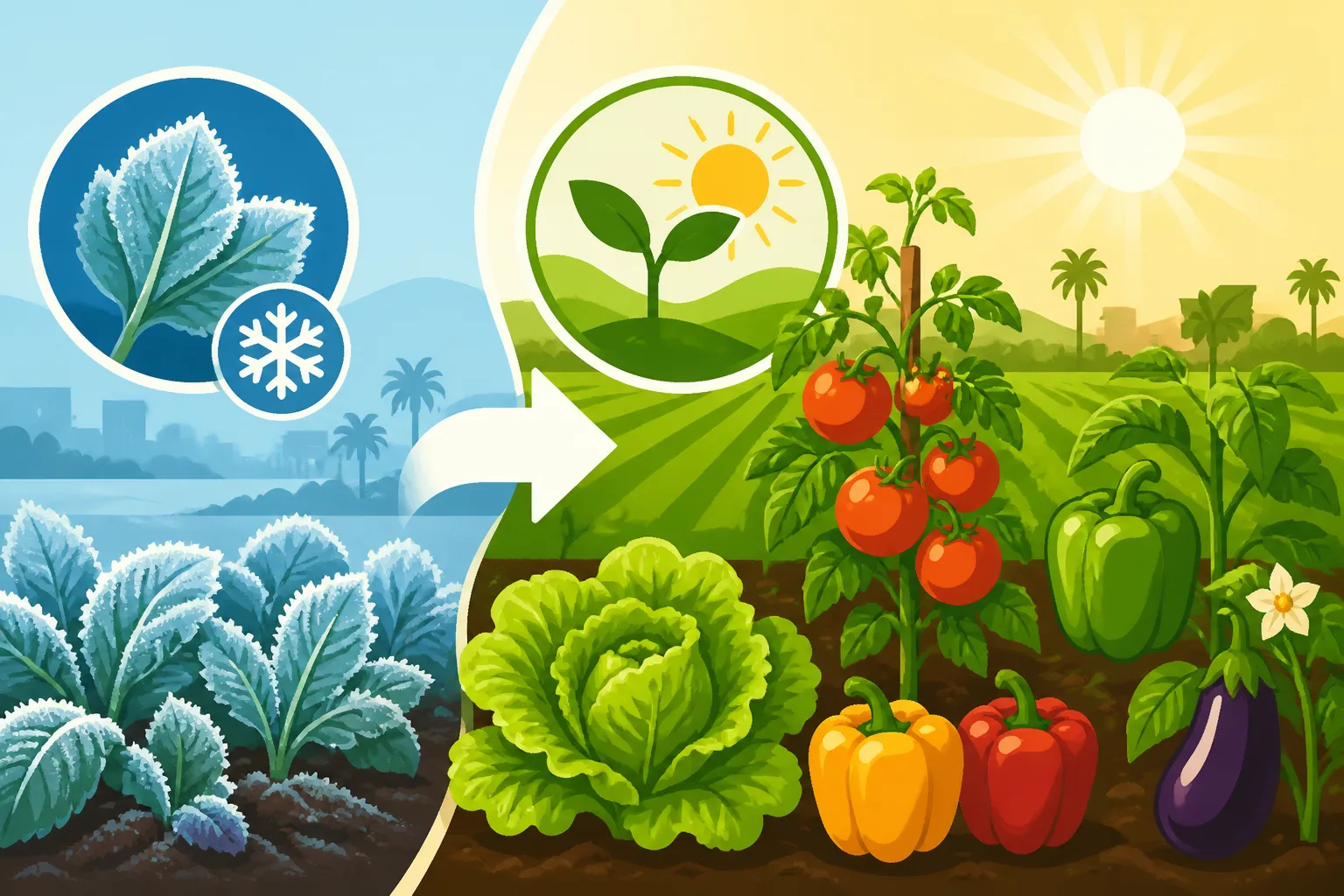
When Spring Frost Risk Ends in Fresno for Warm Vegetables
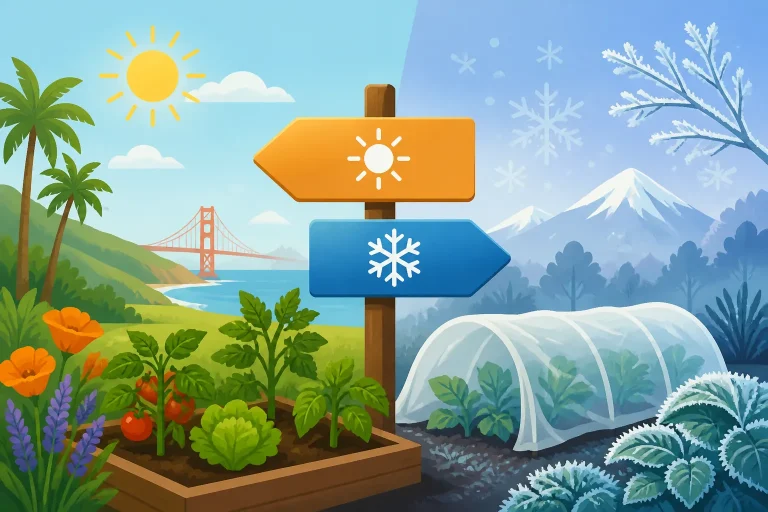
Fresno gardeners often want a clear date for setting out tomatoes, peppers, beans, and other warm vegetables, but frost risk does not end everywhere at once. A regional freeze record can offer context, not a guarantee for a particular yard. The useful approach is to combine local forecasts, site conditions, soil warmth, and a planting plan that can handle a late cold spell.
What a spring frost date can—and cannot—tell you
A last spring freeze date summarizes weather records for a particular station and a stated probability. It is a planning reference, not a promise that frost cannot happen afterward. A date with a 50% probability represents meaningful uncertainty: the historical pattern leaves a real chance of a later freeze.
According to NOAA National Centers for Environmental Information, at the Lemoore Reeves Naval Air Station weather station in California, the 1991–2020 normal last spring freeze (32°F) at 50% probability is 02/24 (February 24). That is useful regional context, but the station is in Lemoore, not Fresno. It should not be presented as Fresno’s own frost date or used as a citywide planting deadline.
Conditions can vary over short distances. A garden in a low spot may collect colder air, while a sheltered site near a building may stay warmer. Open ground, wind exposure, nearby pavement, slope, and cloud cover can all affect what plants experience. Even within the same neighborhood, two yards can have different frost exposure.
The probability matters as much as the date. A gardener who is willing to cover plants and accept some risk may choose to plant earlier than someone who wants to avoid losing tender starts. Neither choice changes the weather; it changes how much uncertainty the gardener is prepared to manage.
For a broader explanation of how these figures work, see Can Average Frost Dates Mislead California Sowing Schedules? and How to Read NOAA Freeze Probabilities for Garden Sowing. Gardeners comparing regional patterns can also use Navigating Spring Frost Probabilities in the Central Valley. Those regional references still do not replace observing the conditions at a specific Fresno property.
Hardiness zones are a different kind of tool. The USDA Agricultural Research Service describes them as general guides for growing perennial plants, not guarantees of plant survival. A hardiness zone does not tell you when a spring frost will occur, whether the soil is ready for sowing, or whether a warm-season vegetable can withstand a sudden cold night.
A planting calendar is most useful when treated as a starting framework. It can help organize tasks and identify the season for a crop, but it cannot account for every yard’s exposure or every year’s weather. The practical question is not simply “Has the date passed?” It is whether your garden and plants are ready for the current conditions, and what you can do if those conditions change.
How to judge frost risk in a Fresno garden
A forecast for Fresno gives a useful starting point, but a general forecast may not match the temperature at plant height in your yard. Check forecasts close to planting and keep watching them after transplanting. Pay attention to overnight lows and any frost or freeze advisories, and consider whether your specific site tends to run colder than nearby open areas.
Notice where cold air settles
Cold air can move downhill and pool in low places. A bed at the bottom of a slope, behind a wall that blocks airflow, or in a sheltered hollow may be more vulnerable than a nearby raised or sloping area. If a corner of the yard is repeatedly colder, treat it as a separate microclimate rather than assuming all beds share the same risk.
A simple way to learn your site is to compare conditions around the yard on clear, calm nights when cold is possible. Note which areas seem to chill first, where frost appears, and where tender growth remains unaffected. These observations will not predict the weather, but they can help you place sensitive crops in a more favorable spot.
Buildings, fences, and pavement can influence local conditions, but they do not make a bed frost-proof. A wall may shelter plants from wind, for example, while a low area nearby still collects cold air. Avoid relying on one feature as a guarantee.
Separate the forecast from the plant’s immediate surroundings
A forecast describes a broader area. Plants experience the conditions right around their leaves and stems. A bed exposed to open sky can cool differently from one beneath a canopy or close to a sheltered structure. A low-growing seedling may also be more exposed to cold air near the ground than a plant with more developed growth.
When a cold night is forecast, check the garden itself rather than relying only on a regional label such as “Fresno.” This is especially useful if you garden on the edge of town, near open fields, or in a spot with a noticeable change in elevation or exposure. For more on the way yard conditions change planting windows, see How Microclimates Shift Planting Dates Within One Town and Adapting Local Planting Calendars for Yard Microclimates.
Consider how much loss you can accept
A gardener with a small number of prized starts may reasonably wait for a more reassuring forecast. Someone with extra seedlings, a protected bed, or a willingness to replant may accept greater uncertainty. There is no single risk tolerance that suits every garden.
Think through the consequences before planting. If a cold snap would wipe out a crop that is difficult to replace, waiting or using protection may be the better choice. If the plants are replaceable and the season is moving forward, planting a portion while holding back additional starts can spread the risk.
This measured approach avoids treating frost dates as an all-or-nothing signal. You can prepare beds and harden plants while continuing to monitor the forecast, then decide whether to transplant, wait, or protect the crop.
When warm vegetables are ready to go outside
Warm-season vegetables are sensitive not only to frost but also to chilly conditions that slow growth. Avoid treating “no frost in the forecast” as the only sign that a bed is ready. A plant may survive a cool night and still struggle to establish if the soil and surrounding conditions remain cold.
Tomatoes, peppers, beans, cucumbers, squash, and melons are common warm-season choices, but they do not all respond to stress in exactly the same way. A recently transplanted start is also more vulnerable than a plant that has had time to establish. Use the crop’s growing instructions and local planting guidance, then weigh those recommendations against your current conditions.
Check soil conditions before sowing or transplanting
Soil that remains cold and wet can delay germination and make it harder for transplants to establish. Rather than relying on a calendar alone, check conditions in the bed where you intend to plant. Soil can warm at different rates depending on sun exposure, texture, moisture, mulch, and whether the bed is raised.
A sunny bed may warm sooner than a shaded or damp one, but that does not prove every part of the garden is ready. Check the actual planting area. If the soil feels cold and stays wet, give it more time or use a crop that suits the conditions better. Avoid disturbing wet soil unnecessarily, since working it while saturated can damage its structure.
The details differ for direct-sown seed and nursery starts. Seeds need suitable soil conditions to germinate, while transplants must adjust to both the soil and the outdoor environment. For help weighing the two methods, see Direct Seed or Transplant? Timing Your California Garden. For a broader overview of seasonal crop choices, California Vegetable Planting: Cool- vs Warm-Season Crops can help you sort crops by their general growing season.
Harden starts before transplanting
Indoor-grown or greenhouse-grown starts need a gradual adjustment to outdoor light, wind, and temperature. Moving them straight into full sun or leaving them exposed to a cold night can add stress just when their roots are being disturbed.
Harden plants by increasing their exposure to outdoor conditions gradually. Begin in a protected location, then lengthen the time outside and increase exposure as the plants respond well. Keep an eye on drying and wilting during this transition, especially in warm or breezy weather. If the forecast turns cold, bring vulnerable containers into shelter or postpone further exposure.
A plant that has been hardened off is better prepared for ordinary outdoor conditions, but hardening does not make a tender vegetable frost-proof. Keep monitoring the forecast after planting. For more detail about gradual exposure in inland conditions, see Hardening Off Starts Before Transplanting in Hot Inland Sun.
Plant in stages when timing is uncertain
If you are unsure whether conditions are settled, you do not have to make the whole planting decision at once. Set out a portion of the crop and keep other starts protected. If the first plants establish well and the forecast remains favorable, plant more later. This reduces the chance that one cold spell will affect the entire crop.
Staggered sowing can also help avoid putting every seed or transplant into the same weather window. It may spread harvest timing and give you a second chance if an early planting struggles. The trade-off is extra attention: separate sowings need tracking, and later plants may mature at a different time.
Use this strategy selectively. If you have only a few plants or limited room to protect them, waiting for better conditions may be simpler. If you have room for successive plantings, spreading out the risk can make the garden more resilient.
Protecting warm vegetables when a cold night is possible
Protection can reduce exposure, but it is not a substitute for checking the forecast or choosing an appropriate planting time. A cover works best when it is ready before the cold arrives and secured so it does not blow off or press heavily on fragile plants.
Use covers with realistic expectations
A garden fabric or other suitable cover can help shield plants from cold air and reduce heat loss around them. The material and setup matter: a cover that touches tender foliage may offer less protection than one supported above the plants, and gaps can allow cold air to reach the bed. Follow the product’s instructions and avoid assuming that any cover will protect against every freeze.
Have the materials ready before a cold night is expected. Waiting until late evening can make it harder to cover the bed carefully, secure edges, and protect plants without breaking stems. Remove or adjust covers when conditions improve, following the material’s guidance so plants are not left under unsuitable conditions.
Containers have an advantage because they can often be moved under shelter. That flexibility can make them useful for a small number of especially vulnerable starts. But containers can also dry out and cool quickly, so check them rather than assuming they are protected simply because they are portable.
Choose the most favorable location available
Planting in a warm, sunny, well-drained area can support faster establishment, while a frost-prone hollow or wind-exposed bed may carry more risk. A raised bed can warm differently from nearby ground, but its location and moisture still matter. Use what you observe in your own yard to decide where to place the most tender plants.
Do not crowd plants against a building or put them in a location that creates other problems just to gain shelter. Consider sunlight, drainage, access, and the mature size of the crop as well as cold exposure. A favorable planting spot should support the vegetable through the season, not only through one uncertain night.
Avoid adding stress during a cold spell
A plant already struggling from transplant shock, drought, waterlogging, or damage may be less able to recover from cold stress. Water according to the needs of the bed and the plants, rather than making a last-minute change based on a frost date alone. Avoid applying fertilizer or other products as an improvised way to protect plants; use products only as their labels direct.
After a cold night, give plants time to show how they have responded. Damaged leaves may look alarming, but the extent of injury can take time to become clear. Avoid immediately cutting back or removing a plant unless the damage is unmistakable. Check stems and new growth, then decide whether the plant is recovering or whether replacement makes more sense.
For more on adjusting irrigation to local conditions, see Garden Irrigation Timing and Depth for California Yards. If a sudden warm spell makes newly planted beds vulnerable to drying, Watering Edibles in Extreme Summer Heat: Deep Soaks and Mulching offers additional context for managing moisture in warm conditions.
A practical planting decision for Fresno
Instead of choosing a single date and treating it as a guarantee, use a short decision process. It lets you combine regional records with what is happening in your yard now.
- Use the regional record as context. The Lemoore observation can help show a broad seasonal pattern, but it does not establish a precise frost cutoff for Fresno.
- Check a current local forecast. Look at the overnight outlook and any frost or freeze advisories before planting and while vulnerable plants are establishing.
- Assess the bed. Consider whether it is low-lying, exposed, shaded, wet, or sheltered, and check whether the soil is warming and draining appropriately.
- Prepare the plants. Harden off starts gradually and make sure covers or a sheltered location are available if conditions change.
- Choose your risk level. Plant now, wait, protect a small early planting, or sow in stages according to how much loss you are willing to risk.
- Keep observing after planting. A favorable forecast before transplanting does not eliminate the need to watch for later cold nights.
A local planting calendar can help you plan what to sow and when to prepare beds, but the best calendar is one you adapt to your site. Look for guidance that distinguishes the Central Valley from California’s coast, deserts, and higher elevations. Choosing the Right Local Sowing Calendar in California and California Sowing and Transplanting Calendar by Region can help with that broader planning.
For Fresno gardeners, the practical takeaway is to avoid treating the Lemoore station date as a local promise. Use it as one regional reference, then let the forecast, soil condition, garden exposure, and your willingness to protect plants determine whether a warm vegetable is ready to go outside.
Frequently Asked Questions
Does the Lemoore freeze date give Fresno’s last frost date?
No. It is a normal for a weather station in Lemoore, so it offers regional context rather than a precise date for a Fresno yard. Conditions can differ by location and from year to year.
Should I plant warm vegetables as soon as the frost date has passed?
Not automatically. Check the forecast, soil conditions, and the needs of the crop. Warm vegetables can struggle in cold soil even when frost is not expected.
Can a cover make an early planting safe?
A cover may reduce exposure, but it cannot guarantee protection in every situation. Use a suitable cover as directed, secure it properly, and continue monitoring the forecast.
Are hardiness zones useful for deciding when to plant tomatoes or peppers?
They are not a substitute for frost and planting guidance. The USDA Agricultural Research Service describes hardiness zones as guidance for perennial plants, rather than a way to predict spring weather or warm-vegetable readiness.
Sources
- USDA Agricultural Research Service — How to Use the Maps | USDA Plant Hardiness Zone Map (checked November 14, 2026)
- NOAA National Centers for Environmental Information — NOAA NCEI 1991–2020 Climate Normals — Lemoore Reeves Naval Air Station, California (checked November 14, 2026)
Disclaimer
This article is for general informational purposes only and does not constitute professional advice. Laws, prices and regulations vary by location and change over time. Consult a qualified professional for guidance on your specific situation. California Gardening Guide is not a government agency and is not affiliated with any university extension, state department of agriculture or other government agency.