Do USDA Hardiness Zones Fit the San Francisco Bay Area?
A USDA hardiness zone can help you narrow down which perennial plants may handle winter cold, but it cannot describe every Bay Area garden. Coastal air, sheltered courtyards, hillsides, and warm walls can create different conditions close together. The useful approach is to treat the zone as one clue, then match plants to the conditions in your own yard.
What a USDA hardiness zone tells you
According to the USDA Agricultural Research Service, the map is based on average annual extreme minimum winter temperature. In practical terms, a zone gives a broad indication of how cold a location’s winters tend to get. That makes it a helpful first screen when choosing perennial plants, including shrubs, trees, and other plants expected to live through multiple seasons.
USDA Agricultural Research Service describes hardiness zones as general guides for growing perennial plants, not guarantees of plant survival. A zone can suggest whether a plant is likely to tolerate winter cold in a broad area, but it cannot promise that a particular plant will thrive in a particular yard. Nor does a matching zone settle every question about whether the plant is a good fit.
Think of the zone as a starting point rather than a planting instruction. It can help you rule out plants that are clearly poorly matched to local winter conditions, or identify candidates worth researching. From there, consider the plant’s other needs and the site where it will grow.
A hardiness zone is especially useful when a plant description identifies a preferred cold range. If the plant’s needs appear compatible with the broad conditions in your area, you can investigate further. Check whether it also needs a particular amount of sun, soil drainage, summer warmth, or moisture. A plant can be cold-hardy and still struggle if those other requirements are not met.
The map is not a complete gardening calendar. It does not tell you when soil is warm enough to sow a crop, when a stretch of coastal fog may slow growth, or when a garden bed is likely to dry out. Those questions call for other kinds of local information. For vegetables, for example, a regional planting calendar and the crop’s seasonal needs are more useful than a winter-hardiness label alone. See California Vegetable Gardening Guide: Soil, Seasons, and Harvests for a broader view of how those factors fit together.
It also helps to separate plant hardiness from plant performance. A perennial may survive winter in a location and still grow slowly, flower poorly, or fail to reach the size you hoped for. Survival is one threshold; steady growth and a good fit for the site involve more than winter minimums.
When you use a map or look up a location, avoid treating a zone boundary as a sharp line on the ground. A mapped area describes a broad pattern, not every sheltered corner, exposed slope, or paved courtyard within it. To understand how those boundaries work across California, see Navigating Microclimates Across California Hardiness Zones.
Why the Bay Area is difficult to summarize with a zone
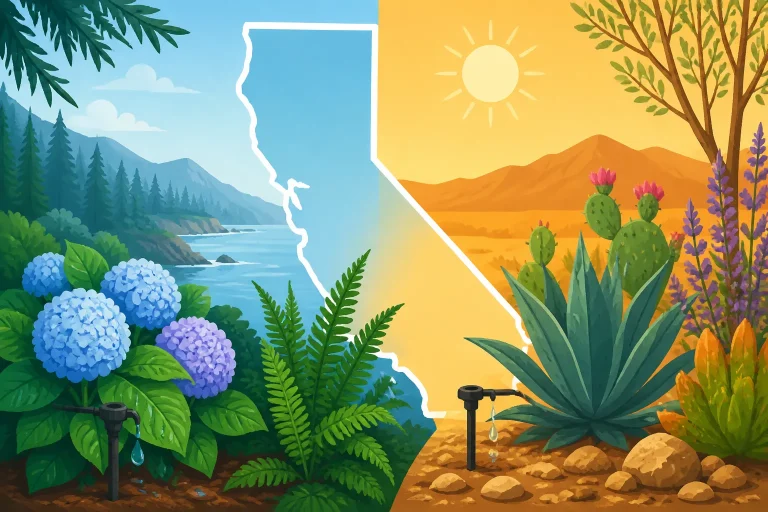
The San Francisco Bay Area contains many kinds of garden settings, and conditions can change over short distances. Coastal influence, elevation, wind exposure, shade, buildings, paving, and slope all affect the conditions a plant experiences. That variety is why a zone can be useful at the regional scale yet feel incomplete when you are choosing plants for one particular bed.
USDA Agricultural Research Service notes that microclimates that are too small to show up on the map may affect a garden. A backyard can have a sheltered spot close to a more exposed area, or a sunny wall next to a cooler, shaded bed. Those differences matter because plants respond to the conditions around their roots, stems, and leaves—not to a map label.
Coastal, sheltered, and exposed sites
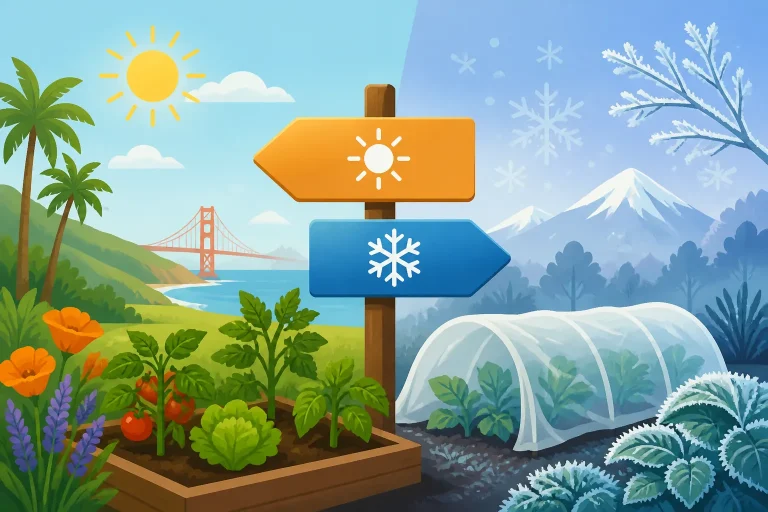
A garden influenced by coastal air may have different growing conditions from a site farther inland. Fog, wind, and moderated temperatures can affect when crops grow well and how quickly plants dry out. A bed shielded by a fence or building may be less exposed to wind than an open plot nearby. Even within one property, an area with afternoon shade may suit a different plant than a sunny patch beside a wall.
These are not reasons to ignore the zone. They are reasons to avoid using it alone. The zone may still help you screen for winter cold tolerance, while site observations help you decide whether the plant’s everyday growing conditions are suitable.
For edible gardens, coastal fog and inland heat can shift planting and harvest expectations. A calendar made for a broad region may need adjustment for the particular conditions around your home. Matching California Garden Crops to Coastal Fog and Desert Sun offers a crop-focused way to think about those differences.
Slopes, buildings, and ground conditions
A slope can differ from a nearby level area in sun exposure, wind, and how water moves across the ground. Buildings and fences can create shade or shelter, while paving and nearby walls can make a small area feel different from an open bed. These features do not change the regional map, but they can change the conditions your plant actually experiences.
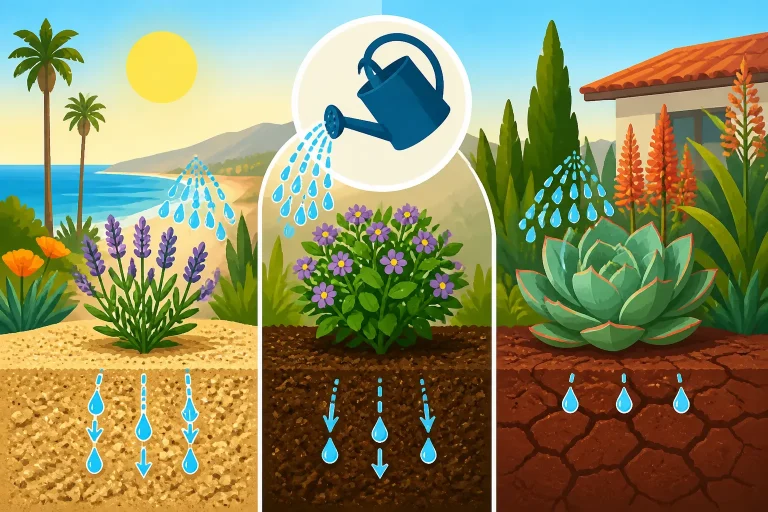
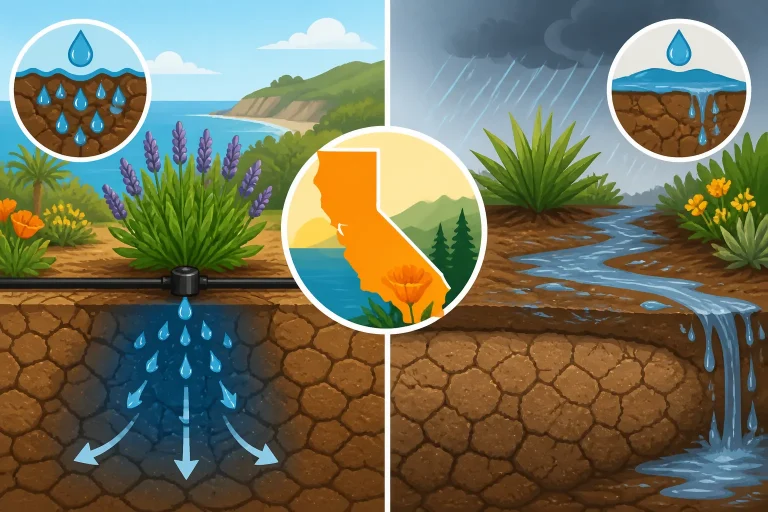
Soil also matters. Two beds with similar winter exposure may behave differently if one drains readily and another stays wet after rain or irrigation. A plant that tolerates the winter cold may still be poorly suited to a bed that holds too much moisture, dries quickly, or has a different soil texture from the plant’s preferred conditions.
Use these differences to describe the site rather than trying to force each corner into a separate map category. The goal is not to find a perfect label for every square foot. It is to make a better plant choice by noticing what the area is like through the seasons.
What the zone does not answer
A hardiness zone does not tell you how much summer heat a plant can tolerate, whether a vegetable crop will mature in your growing season, or how often a container will need watering. It also cannot predict every unusual weather event. Those questions need information suited to the plant and the problem.
For planting dates, use a calendar that accounts for local growing conditions, rather than assuming a zone predicts a sowing window. Adapting Local Planting Calendars for Yard Microclimates can help connect a regional calendar with the differences you see in your own yard. For vegetables, California Sowing and Transplanting Calendar by Region is a more relevant starting point than a hardiness zone when you are deciding when to sow or transplant.
How to use a zone when choosing plants
The most reliable way to use a zone is to treat it as one part of a plant-fit check. Start with winter tolerance, then compare the plant’s other needs with the site. If the plant is intended for a specific purpose—such as a low-water border, a shaded bed, or a productive vegetable patch—check whether it can meet that purpose under your conditions.
A useful comparison looks like this:
| Question | What the zone can help with | What else to check |
|---|---|---|
| Can a perennial tolerate local winter cold? | It offers a broad cold-tolerance clue | The plant’s own hardiness information and your site’s exposure |
| Will it grow well in a sunny bed? | It does not answer this by itself | Sun exposure, summer heat, and moisture needs |
| When should a vegetable be planted? | It is not a planting calendar | Regional sowing guidance, soil warmth, and local seasonal conditions |
| Will the plant suit a particular corner? | It may describe the broader area | Shade, wind, drainage, slope, and nearby structures |
| Will it survive in a container? | It does not describe the container’s conditions | Pot exposure, drainage, soil mix, and how quickly it dries |
Before buying or planting, use this process:
- Identify the plant’s main requirements. Check its stated winter tolerance, sunlight preference, soil and drainage needs, and moisture needs. For edible crops, also look for guidance on the season and conditions needed for successful growth.
- Describe the exact planting spot. Note whether it is exposed or sheltered, sunny or shaded, near paving or a wall, and on a slope or level ground. Pay attention to conditions that seem different from the rest of the yard.
- Use the zone as an initial screen. If the plant’s winter needs appear incompatible with the broad local conditions, research a better-suited option. If they appear compatible, continue checking rather than treating that as a guarantee.
- Compare the plant’s other needs with the site. A plant suited to winter cold may still be a poor match for a hot, exposed bed, a damp area, or a shady location.
- Check a local planting resource for seasonal decisions. For sowing and transplanting, use a California calendar relevant to your region and adjust it to the conditions around the garden.
- Observe the site over time. If you are unsure about a location, take notes on when it receives sun, whether it is windy, and how the soil behaves after rain or watering. This gives you useful information for future choices.
A ZIP-code lookup can be a convenient way to get a starting point, but it cannot describe the conditions of every home within that area. Use the result as a broad reference, then evaluate the planting site itself. How to Find Your USDA Zone by ZIP Code in California explains the role of a lookup without replacing local observation.
When a plant listing gives only a zone range, look for more information before deciding. Does the plant need full sun, or does it tolerate shade? Does it need well-drained soil? Is it suited to the kind of summer conditions in your garden? A listing that answers only the winter-hardiness question leaves important parts of the decision unresolved.
This is particularly important when choosing a plant for a difficult spot. A narrow side yard, windy slope, hot patio edge, or shaded corner can have conditions that are unlike the rest of the property. It may be more useful to seek plants described for that particular exposure than to rely on a broad zone match. Why Microclimates Matter Beyond Your California Hardiness Zone offers more detail on using local conditions to refine a choice.
Build a planting plan around the site, not just the map
A zone is most valuable when it helps you ask a better question. Instead of asking, “What can I grow in this zone?” ask, “Which plants can handle the winter conditions here and also suit this spot’s sun, soil, moisture, and seasonal pattern?” That shift keeps the map useful without expecting it to do the work of a full garden plan.
Make a simple site record
You do not need specialized equipment to start noticing differences around the yard. Record what you can observe consistently:
- Where the sun reaches the bed and when shade falls across it.
- Whether wind feels stronger in the spot than elsewhere in the yard.
- Whether the soil drains quickly or stays wet after watering or rain.
- Whether a wall, fence, tree, or paved area changes the exposure.
- Whether plants in that area appear to grow differently from similar plants elsewhere.
Keep the notes focused on the planting decision. If a bed is sunny and exposed, that may point you toward plants suited to those conditions. If it is shaded and stays damp, that is a different set of constraints. The purpose is not to produce a perfect climate record, but to notice patterns that a broad map cannot show.
Choose plants for more than cold tolerance
For perennial plants, compare winter hardiness with the rest of the plant’s needs. A plant can fit the cold conditions yet be a poor match for the soil or summer exposure. If a plant’s requirements do not align with the spot, consider a different species or a more suitable location rather than assuming the zone is enough to predict success.
For native plants, matching the species to local sun, soil, and slope can be just as important as considering winter conditions. Matching California Native Plants to Sun, Soil, and Slope can help you approach that decision from the site outward. If you are choosing perennials more broadly, Selecting Landscape Perennials for California Microclimates is another relevant resource.
For food gardens, keep the crop and the planting season in view. A vegetable’s needs may be tied to warmth, day length, or the length of the growing period, none of which a hardiness zone is designed to summarize. Choosing the Right Local Sowing Calendar in California can help with timing, while Handling Yard Microclimates: Matching Crops to Sun, Fog, and Wind focuses on matching crops to local conditions.
Treat setbacks as information
If a plant struggles, the zone is not necessarily wrong. The plant may be experiencing a problem unrelated to winter cold: unsuitable light, inconsistent moisture, poor drainage, heat exposure, or competition from nearby roots. Look at what is happening to the plant and where it is growing before concluding that the map gave you a bad answer.
Likewise, a plant that does well in one part of the yard may not succeed in another. That difference can be useful evidence. It suggests that exposure, soil, or moisture varies across the property, and that future plantings may benefit from matching plants to those local conditions more carefully.
For a new garden, it can help to start with a small number of plants in clearly different spots rather than treating the whole yard as one uniform space. Observe how each location behaves and use that experience to refine future choices. A zone lookup can still serve as a first check; the garden itself supplies the finer detail.
The practical takeaway is straightforward: use the USDA hardiness zone to consider winter cold, not to make every planting decision. In the San Francisco Bay Area, local exposure and microclimates can matter just as much when choosing what to grow and where to put it.
Frequently Asked Questions
Should I choose a plant just because it matches my USDA zone?
No. A zone match is a useful first check for winter cold, but it does not confirm that the plant suits your sun, soil, drainage, moisture, or summer conditions. Check the plant’s full requirements and the exact site before planting.
Can two gardens in the same Bay Area neighborhood have different conditions?
Yes. A sheltered bed, exposed slope, shaded courtyard, and sunny area beside a wall can experience different conditions even when they are close together. Use the regional zone as a broad reference and assess each planting spot on its own.
Does a hardiness zone tell me when to plant vegetables?
No. The zone is not a vegetable planting calendar. Use regional sowing and transplanting guidance, and consider the crop’s needs and conditions in your yard.
What should I do if a plant’s zone information is unclear?
Look for details about the plant’s winter tolerance and its other growing requirements. If the information still does not let you judge the fit, seek guidance from a California gardening resource or a knowledgeable local nursery before committing to the plant.
Sources
- USDA Agricultural Research Service — 2023 USDA Plant Hardiness Zone Map | USDA Plant Hardiness Zone Map (checked November 14, 2026)
- USDA Agricultural Research Service — How to Use the Maps | USDA Plant Hardiness Zone Map (checked November 14, 2026)
Disclaimer
This article is for general informational purposes only and does not constitute professional advice. Laws, prices and regulations vary by location and change over time. Consult a qualified professional for guidance on your specific situation. California Gardening Guide is not a government agency and is not affiliated with any university extension, state department of agriculture or other government agency.