Watering Season Differences Between NorCal and SoCal
A watering calendar that works in Sacramento may leave a San Diego garden too wet in winter or too dry in summer. Northern and Southern California share a Mediterranean pattern, but rainfall, fog, heat, and local soil change when gardens need irrigation. The useful approach is to treat the seasons as cues, then adjust watering to the moisture in your own soil.
Why watering seasons differ across California
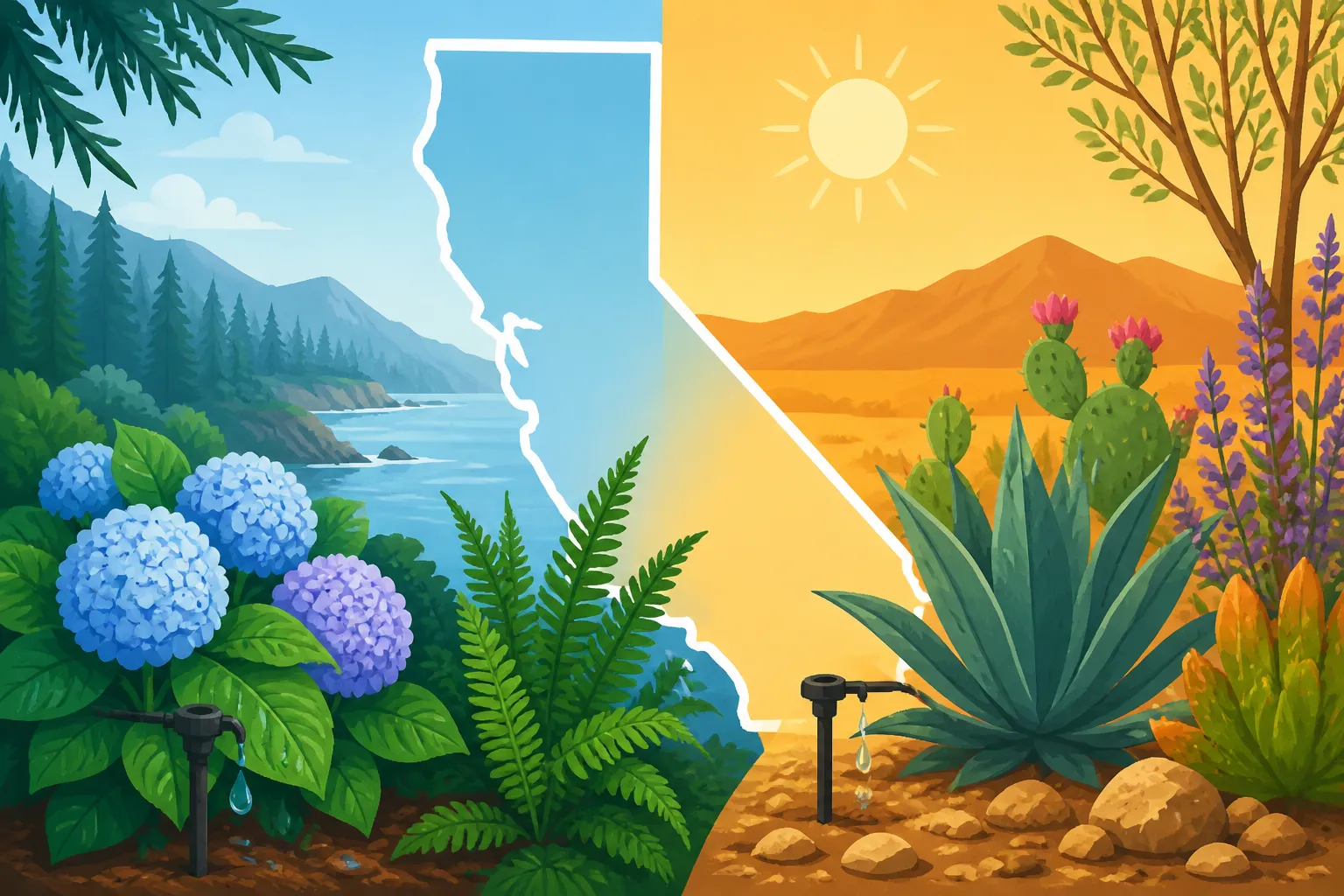
Much of California has wet winters and dry summers, but that broad pattern does not produce one statewide irrigation schedule. Northern California generally has a longer, wetter rainy season than much of Southern California, while Southern California often has a longer dry period and warmer conditions extending into fall. These are regional tendencies, not rules for every yard.
Local conditions can shift the pattern substantially. A coastal garden may get fog and cooler air while a nearby inland garden faces hot, dry afternoons. Elevation, slope, wind exposure, shade, and soil texture also affect how quickly water is lost or absorbed. Even two gardens in the same town may need different schedules.
The key distinction is not simply “north needs less water” or “south needs more.” It is how long natural moisture lasts, how quickly the soil dries, and how much water reaches the plants’ root zones. An established landscape with deep roots and mulch may need less supplemental water than a newly planted bed in the same climate.
| Seasonal pattern | Northern California tendency | Southern California tendency | What to check in your yard |
|---|---|---|---|
| Winter | Rain often provides a substantial share of garden moisture, though dry spells can occur | Rain is less dependable in many areas; some gardens may need occasional irrigation between storms | Soil moisture below the surface, drainage, and recent rainfall |
| Spring | Rain may taper off while plants begin active growth | Dry weather and warmth may arrive earlier or last longer | Whether rain is still moistening the root zone and whether new growth is wilting |
| Summer | Long dry periods are common, with major differences between coast, inland valleys, and mountains | The dry season is often prolonged; inland and desert areas may experience intense heat | Root-zone moisture, heat exposure, wind, and plant response |
| Fall | Rain may return earlier in some locations, but timing varies | Dry weather can continue well into fall in many areas | Whether meaningful rain has soaked the soil, rather than just wetting its surface |
Use the table to frame observations, not as a fixed calendar. For a closer look at how local climate affects planting schedules, see Choosing the Right Local Sowing Calendar in California and Adapting Local Planting Calendars for Yard Microclimates. Watering decisions benefit from the same local approach: the season gives a starting point, but the soil and plants tell you whether to irrigate.
Winter and spring: rain, runoff, and the start of active growth
Northern California: use winter rain before adding irrigation
In many Northern California gardens, winter rain supplies most of the moisture that established outdoor plants need. Turning on a routine schedule simply because it is winter can keep soil saturated, especially in heavy clay, compacted beds, shaded locations, and low spots. Wet soil can also drain slowly after a storm, so a dry surface does not necessarily mean the root zone needs water.
Check below the surface before irrigating. Feel the soil several inches down near the plants’ roots, or use a soil probe to assess moisture at different depths. If the root zone is still damp, wait. If it has dried during a long rain-free stretch, a supplemental soak may be appropriate for plants that need it. The right decision depends on the plant, soil, drainage, and weather.
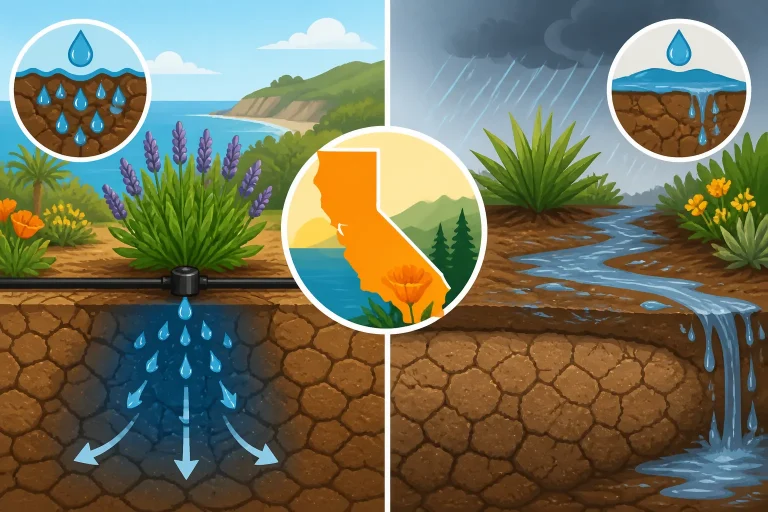
Rain does not always reach every part of a garden evenly. Roof overhangs, dense tree canopies, slopes, and wind can leave pockets drier than nearby open ground. A bed under an eave may need attention while the rest of the yard is still wet. On a slope, rain may run off before soaking in; shorter watering cycles with time for absorption can help limit runoff when irrigation is needed.
As spring approaches, Northern California gardens can move from wet soil to dry conditions fairly quickly. Rain may become less frequent before plants have finished their spring growth. Start checking moisture more often as the days warm, but avoid switching automatically to a summer schedule. Irrigation needs increase when the soil begins drying at root depth, not on a particular date.
Southern California: winter rain may not carry every garden through
Southern California’s winter watering needs vary widely. Some winters bring enough rain to keep many established beds moist for extended periods. In other stretches, a garden may go weeks without useful rainfall. A light shower can dampen the soil surface without replenishing moisture around deeper roots, so check below the mulch and surface layer rather than treating any rain as a reason to stop watering for a set period.
Inland valleys and desert areas may dry faster than cooler coastal locations. A sunny, exposed bed can lose moisture while a shaded bed nearby remains damp. Newly planted shrubs and perennials usually need closer attention than established plants because their roots have not yet explored a large volume of soil. Containers are especially quick to dry, even in cool weather.
When rain does arrive, pause automatic irrigation if the soil is already moist. After the storm, check whether water penetrated the root zone and whether it drained away. If water is pooling or standing, more irrigation is the wrong response; investigate drainage and soil compaction instead. Guidance on judging moisture below the surface is covered in Checking Topsoil Moisture Before Midsummer Yard Irrigation, and the same basic check is useful in winter.
Spring is a transition, not a switch
Across both regions, spring is when a fixed winter routine can become unreliable. Temperatures rise, days lengthen, and plants grow, but rain may still be contributing moisture. Some gardens need irrigation before others, especially where spring is warm and dry, where the soil is sandy, or where wind increases evaporation.
Before restarting or increasing irrigation, inspect the root zone in several representative spots. Check a sunny area, a shaded area, and any bed beneath an overhang or tree canopy. Then consider plant stage: newly transplanted vegetables and flowers are more vulnerable to drying than established shrubs with broad root systems. A useful spring routine is to reassess regularly as weather changes, rather than turning every zone on at once.
If a garden has a controller, review each zone separately. Turf, containers, vegetable beds, trees, and native plantings do not have identical water needs. A single spring adjustment for the whole property can overwater one area while leaving another short. For broader guidance on timing the seasonal restart, see When to Resume Garden Irrigation in Spring Across California.
Summer: long dry spells, heat, and different local demands
Northern California: the dry season still varies by location
In much of Northern California, summer irrigation becomes important because rainfall is scarce. But the amount and timing of supplemental water depend on where the garden is. Coastal areas may be moderated by fog and cooler temperatures, while inland valleys can experience hot afternoons. Higher elevations and exposed foothill sites have their own mix of heat, wind, and soil conditions.
During warm, dry weather, aim to moisten the plants’ root zones rather than repeatedly wetting only the surface. Shallow, frequent watering can encourage roots to remain near the surface, where they are more exposed to heat and drying. However, watering deeply is not the same as running irrigation until water flows off the bed. If water starts pooling or running downhill, pause and allow it to soak in before continuing.
Soil texture matters. Sandy soil generally drains and dries more quickly than loam or clay, while heavy clay may absorb water slowly and produce runoff when irrigation is too fast. A timer setting that works for one soil type may not suit another. If you see water moving across the surface before it has soaked in, adjust the delivery pattern rather than assuming the plants need a longer uninterrupted run. See Matching California Garden Watering to Sand, Loam, and Heavy Clay and How California Clay Soils Affect Irrigation Depth and Runoff for more on texture and water movement.
Summer heat also changes how plants respond. Wilting during the hottest part of the day does not always mean the soil is dry; some plants temporarily lose water faster than roots can replace it. Check soil moisture before adding water. If the root zone is already moist, more irrigation may contribute to waterlogged roots rather than solve heat stress. If the soil is dry where roots are active, water may be needed.
Mulch can help moderate soil temperature and slow moisture loss, but it does not remove the need to check below the surface. Keep mulch from piling directly against stems or trunks, and inspect the soil beneath it. A mulch layer can make the surface look dry or hide wet soil underneath. More on keeping roots cooler is available in Mulching Garden Beds to Keep California Roots Cool in Heat.
Southern California: the dry season can stretch well beyond summer
Across much of Southern California, the dry period can extend for months, and some areas remain warm well into fall. That means garden irrigation may continue after the hottest part of summer has passed. A calendar that reduces watering at the first hint of cooler weather may leave plants dry if the soil has not yet been replenished by meaningful rain.
Coastal Southern California gardens may have cooler conditions than inland areas, but coastal weather does not guarantee moist soil. Wind, sun exposure, sandy or shallow soil, and planting under roof eaves can all create dry pockets. Inland gardens may face higher heat and faster moisture loss. Desert locations have still different seasonal patterns, so regional averages are not enough to set a yard-level routine.
During heat waves, check plants and soil more often, but resist the temptation to make a large irrigation change based on leaf appearance alone. Leaves may droop in afternoon heat even when soil moisture is adequate. Check at root depth, especially before extending a timer schedule. For gardens facing unusually hot weather, How Often to Irrigate Garden Beds During a SoCal Heatwave and Watering Edibles in Extreme Summer Heat: Deep Soaks and Mulching offer more focused guidance.
Containers need separate attention in both regions. Their limited soil volume warms and dries faster than in-ground beds, and a pot that is adequately moist in the morning may dry rapidly on a hot, windy patio. Container material, size, plant growth, and sun exposure all affect how quickly moisture is lost. Check pots directly instead of assuming a nearby garden bed is a reliable guide. See Watering Backyard Container Plants During Sudden Heat Spikes for practical container checks.
Fall: when to cut back, and when to keep watering
Fall is often the hardest season to manage by calendar alone. Days become shorter and temperatures cool, reducing water loss, but the first useful rain may arrive at different times from year to year. A cloudy day or light shower is not necessarily enough to recharge dry soil. Reduce irrigation in response to cooler conditions and changing plant growth, but keep checking moisture until rain has soaked the root zone.
In Northern California, the first fall storms may signal a transition toward lower irrigation needs, but one storm does not always end the dry season. Check whether the rain penetrated beyond the surface. If the soil below the mulch remains dry, plants may still need supplemental water. Once repeated rain keeps the root zone moist, an automatic summer schedule can cause excess water, particularly in slow-draining soils.
In Southern California, dry weather may continue farther into fall. Established plants can often use less water as temperatures drop, but they may still need occasional irrigation if rain has not arrived and the soil is drying. Newly planted trees, shrubs, and perennials need particular care while their roots establish. Do not assume that a cooler afternoon means the soil has recovered from a long dry period.
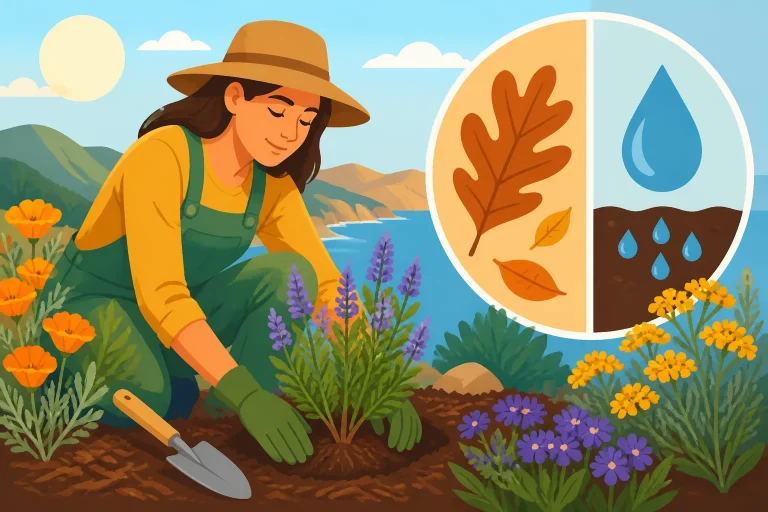
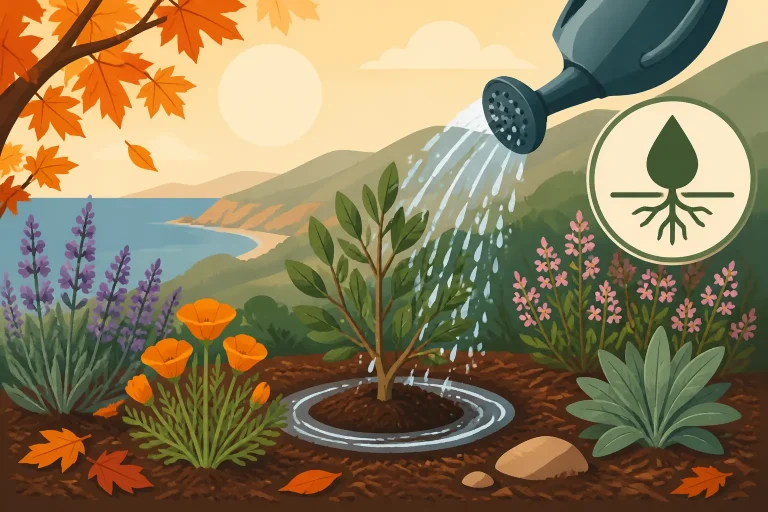
Fall is also a common planting season, and new plants have different needs from established ones. A newly planted native shrub, for example, may need regular attention during its establishment period even though mature plants of the same type can tolerate dry conditions. Follow plant-specific guidance and check moisture around the new root ball, which can dry at a different rate from the surrounding soil. Related advice is in Establishment Watering Rules for Young Drought-Tolerant Plants and Establishing California Natives in Fall: Initial Watering Rules.
A practical seasonal transition looks like this:
- Reduce irrigation as temperatures and plant growth decline, but do not shut it off solely because the calendar says fall.
- Check moisture below the surface after rain, especially beneath overhangs, dense canopy, and mulch.
- Keep an eye on newly planted areas and containers, which may dry sooner than established in-ground beds.
- Pause or adjust zones when rainfall has kept the root zone moist.
- Resume supplemental watering during extended dry spells if checks show that plants’ root zones are drying.
For more detail on the transition from warm-season watering toward rainfall, see California Fall Watering: When to Cut Back and When to Wait for Rain.
Build a local routine that responds to soil and plants
A reliable irrigation routine is based on observations, not a month-by-month setting that stays unchanged all year. Start by separating the yard into zones with similar exposure, plants, and soil. A sunny vegetable bed, a shaded border, a lawn, and a group of containers usually should not share one schedule simply because they are nearby.
Use a moisture check to decide whether irrigation is needed. Examine soil near the plants’ active roots, not just the surface. A trowel or soil probe can reveal whether the ground is damp below a dry crust. Check several spots because water distribution can vary with slope, emitter location, shade, and soil. If the soil is moist at root depth, wait and reassess later. If it is dry, water in a way that allows moisture to soak in without runoff.
Observe plants, but interpret symptoms carefully. Persistent wilting, dry leaf edges, or slowed growth may point to inadequate moisture, but similar signs can arise from root damage, heat, pests, or waterlogged soil. Digging a small inspection hole can help distinguish dry soil from saturated soil. If plants look stressed while the root zone is wet, adding water may make the problem worse.
When using irrigation equipment, verify that it delivers water where plants need it. Drip emitters can clog or shift, and sprinklers can miss areas or send water onto pavement. Check the system rather than relying only on the timer display. Irrigation timing and depth depend on the soil, root depth, and delivery method; see Garden Irrigation Timing and Depth for California Yards for more detail.
The following checklist helps keep seasonal changes manageable:
- After rain: Check whether the root zone is wet, not just the surface. Do not irrigate automatically if the soil is already moist.
- At the start of a dry stretch: Inspect representative beds and adjust zones that are drying at different rates.
- During hot weather: Check more often, especially for containers, new plantings, sandy soil, and exposed beds.
- After a heat wave: Reassess the soil before returning to the previous schedule; avoid making a permanent adjustment from a short-lived weather event.
- When seasons shift: Reduce or increase irrigation gradually according to soil moisture, plant growth, and rainfall.
- When conditions differ within the yard: Use separate zones or hand-water specific areas rather than overwatering the entire garden to compensate for one dry spot.
The most useful difference between NorCal and SoCal is the usual timing of the transitions, not a universal watering rule. Northern gardens often rely more on winter rainfall and enter a long summer dry period; Southern gardens may experience a longer dry season and later fall rain. Yet local coast, valley, mountain, and desert conditions can change those patterns. Let seasonal weather set expectations, and let soil moisture guide the actual decision.
Frequently Asked Questions
Does Northern California always need less irrigation than Southern California?
No. Northern California often receives more winter rain, but summer is dry in many areas, and inland heat can raise irrigation needs. Soil, exposure, plants, and local weather matter more than the broad regional label.
Should irrigation be turned off during winter?
Not automatically. Rain may keep soil moist for long periods, but sheltered beds, containers, and areas beneath roof overhangs can dry out. Check moisture at root depth before deciding.
When should summer watering stop in Southern California?
There is no single reliable date. Reduce irrigation as temperatures and plant growth change, but continue checking soil until useful rain has replenished the root zone. A cool spell alone does not show that soil is moist.
How can a gardener tell if a bed needs water?
Check the soil below the surface near the plants’ roots. If it is still moist, wait; if it has dried, irrigation may be needed. Also look for runoff, pooling, or wilting, since plant symptoms can have causes other than dry soil.
Disclaimer
This article is for general informational purposes only and does not constitute professional advice. Laws, prices and regulations vary by location and change over time. Consult a qualified professional for guidance on your specific situation. California Gardening Guide is not a government agency and is not affiliated with any university extension, state department of agriculture or other government agency.