Matching California Garden Watering to Sand, Loam, and Heavy Clay
A watering routine that keeps one California garden thriving can leave another too dry or waterlogged. Soil texture is a major reason: sand drains quickly, loam balances drainage and storage, and heavy clay can hold water long after its surface looks dry. This guide explains how to read those differences, adjust irrigation, and check whether moisture is reaching plant roots.
Why soil texture changes the way watering works
Soil texture describes the relative proportions of sand, silt, and clay particles. It influences how quickly water enters the ground, how far it moves, how much the soil can store, and how easily roots can use the moisture. That means “water deeply” or “water less often” is not a complete plan unless you also know what the soil does with the water.
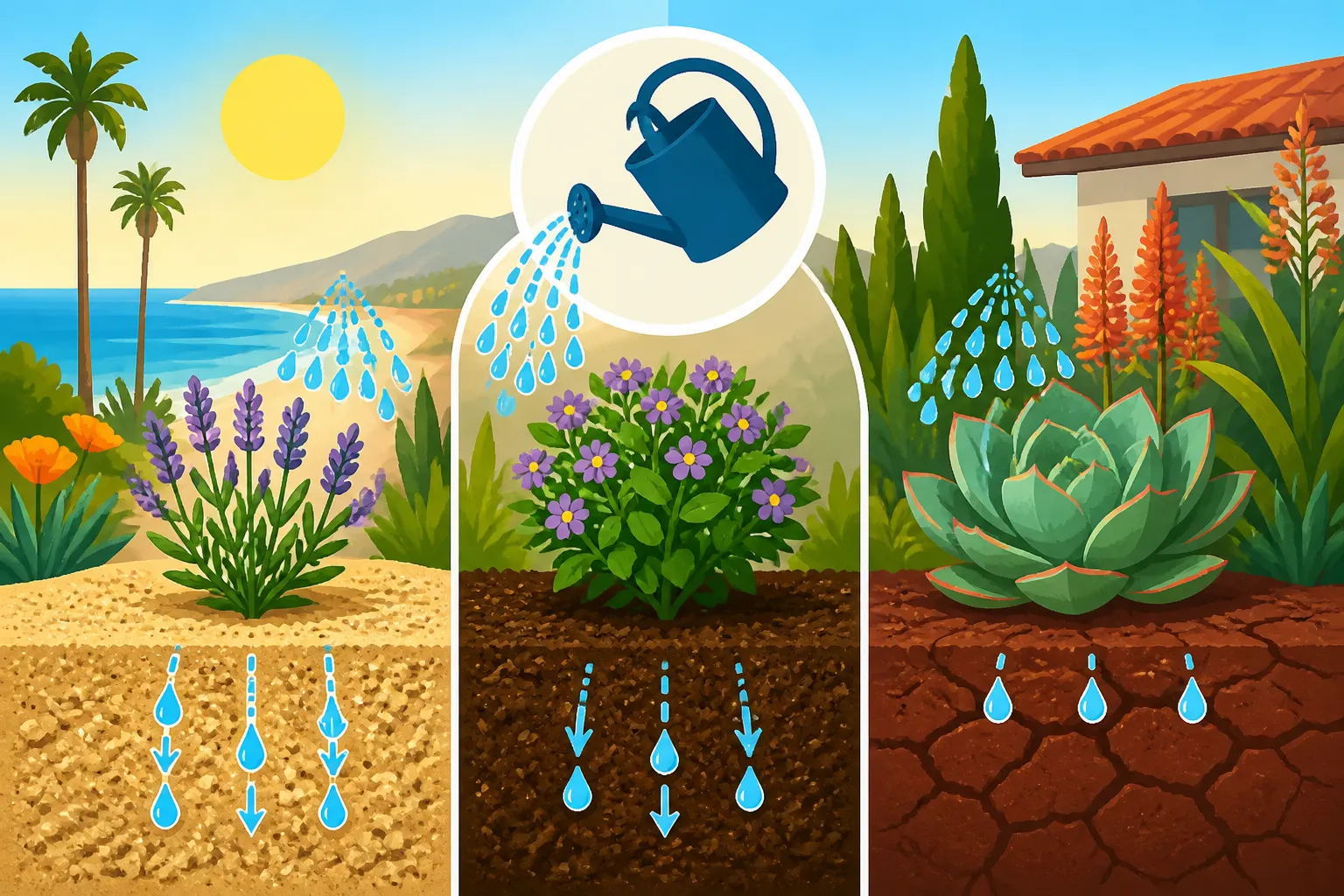
In sandy soil, water usually moves through the larger spaces between particles readily. That can make it easy to wet the root zone, but the soil may not hold moisture for long. A plant can become thirsty again while a gardener is waiting for the next irrigation.
Clay particles are much smaller and closely packed. Heavy clay often takes water in slowly and can remain wet for a prolonged period. Applying water faster than the surface can absorb it may cause runoff, while watering again before the root zone has dried enough can leave roots short of air.
Loam is often used to describe soil with a relatively balanced mix of particle sizes. It may absorb and retain water more evenly than very sandy or heavy clay soil, but it is not a guarantee of perfect drainage. Compaction, organic matter, soil depth, slope, and the soil beneath a planting bed can all change how it behaves.
Texture is only one part of a garden’s conditions. The USDA Agricultural Research Service notes that “Wind, soil type, soil moisture, humidity, pollution, snow, and winter sunshine” can affect plant survival in addition to hardiness zone. For watering decisions, that is a useful reminder: soil texture matters, but so do the plant, weather, exposure, and condition of the site.
Texture is not the same as moisture
A soil can be sandy and damp, or clayey and dry. Texture helps explain how water tends to move and remain in a soil; it does not tell you the current moisture level around a plant’s roots. A dry crust on top does not prove that the root zone is dry, and a wet-looking surface does not prove that water reached deeper roots.
That distinction is important in California, where gardens may have dry stretches, seasonal rain, heat, wind, coastal conditions, and sharply different microclimates. A fixed schedule can miss changes in both weather and soil moisture. Checking the soil near the roots provides a better starting point than relying on surface appearance or a timer alone.
The same yard may contain several soil conditions
A garden is rarely uniform from one end to the other. A raised bed may have a different mix from the ground around it. A slope may shed water differently from a level bed. Soil under a tree, beside a paved area, and in an exposed vegetable patch may dry at different rates even if the texture appears similar.
Previous construction can also leave compacted areas or layers that slow drainage. A shallow layer of topsoil over dense subsoil can behave differently from a deep, consistently textured bed. Observe individual planting areas rather than assuming that one soil description applies to the whole property.
How to recognize sand, loam, and heavy clay
You can learn a lot by observing how soil feels and responds to water. A handful of soil is a useful clue, but it is not a laboratory analysis, and recently watered soil can feel different from dry soil. Compare a few places in the garden, and note whether the soil has been amended or disturbed.
Sandy soil
Sandy soil often feels coarse or gritty when rubbed between your fingers. It may fall apart readily rather than forming a cohesive ball. After watering, it often drains quickly, and the surface can dry fast in warm, exposed locations.
These characteristics can make sandy beds easier to work when damp and less prone to staying saturated. The trade-off is that moisture may not remain available for as long as it would in a soil with more fine particles or organic matter. If you see a plant wilt between irrigations, do not immediately assume the answer is simply a longer watering session. First check whether the water is reaching the active roots and whether the soil is holding it there.
Sandy soil can also be uneven. A bed may contain pockets of finer soil, old planting holes, or areas where organic matter has collected. Those spots may remain moist longer than the surrounding ground. Check more than one location if your plants respond differently across the bed.
For a closer look at irrigation in coarse soil, see Watering Sandy California Soils: Frequency vs Moisture Limits and Adjusting Garden Drip Run Times for Coarse Sandy Soil.
Loam
Loam often feels crumbly when moist and can hold together loosely without becoming sticky. It may accept water without the prolonged ponding associated with compacted heavy clay, while retaining moisture longer than very coarse sand.
That balance makes loam easier to manage in many gardens, but it does not eliminate the need to check. Loam can dry quickly in an exposed, windy site or stay wet in a poorly drained bed. A deep, shaded patch and a shallow, sunny patch may also need different attention.
Treat the word “loam” as a useful description rather than a promise about performance. If water runs off, pools, or disappears rapidly, respond to what you observe in that specific planting area.
Heavy clay
Heavy clay soil often feels smooth and sticky when wet. It can be molded into a dense shape, and when it dries it may become hard, compact, or cracked. Water can take time to enter the surface, especially where the soil is compacted or the ground is sloped.
A slow intake rate does not mean roots need frequent shallow watering. It means water needs time to infiltrate without running away. If the surface ponds or water flows off, continuing to apply water at the same pace may increase runoff rather than improve root-zone moisture.
Heavy clay can retain water for a long time, but its surface may dry while the soil below remains damp. Before irrigating again, check below the surface near the roots. If you repeatedly find saturated soil, the issue may be drainage, compaction, or a mismatch between the plant and the site rather than a need for more water.
For more on clay and irrigation behavior, see How California Clay Soils Affect Irrigation Depth and Runoff and Preventing Water Pooling and Runoff in Heavy Adobe Clay.
A simple field check
A basic comparison can help you form a working picture of the soil:
- Look at the surface after irrigation. Does water soak in, pool, or run downhill?
- Check below the surface near the plant’s roots. Is the soil dry, cool and slightly moist, or wet and sticky?
- Notice how the soil behaves as it dries. Does it become loose and dusty, crumbly, hard, or cracked?
- Compare plants in different parts of the bed. Do some wilt while others remain vigorous?
- Repeat your observations after different weather conditions. A windy, hot day and a cool period can change how quickly a bed loses moisture.
Do not rely on a single test or one plant’s appearance. Wilting can result from several stresses, including roots that are too wet to function well. A plant’s leaves are a signal to investigate, not a diagnosis by themselves.
How to check moisture where roots can use it
The most useful moisture check is close to the roots, not just at the surface. The appropriate depth depends on the plant and its rooting pattern, so avoid treating one depth as correct for every bed. For a small seedling, the active root zone is shallow. An established shrub or fruit tree may draw moisture from deeper soil.
Use a finger, a narrow trowel, or a soil probe to inspect the soil near the plant without damaging the main roots. Check more than one spot if the area is large or if the irrigation does not distribute evenly. The goal is to see whether moisture is present through the part of the soil the plant is actually using.
Soil feel varies with texture:
- In sandy soil, recently moistened soil may feel cool but still fall apart. Check whether the root zone has received moisture rather than expecting it to form a firm ball.
- In loam, a small amount of moisture may make the soil hold together loosely. If it is dry and crumbly where roots are active, the plant may need water, depending on its needs and the weather.
- In heavy clay, wet soil can feel sticky and form a dense mass. If it remains saturated, wait and investigate drainage before adding more water.
A moisture meter can provide another clue, but readings can be affected by where and how it is used. Compare its reading with the soil itself and the plant’s condition rather than treating the device as an automatic watering command. If a reading conflicts with what you observe, check another location and inspect the soil manually.
Check before and after irrigation
A check before watering helps avoid adding water to soil that is already moist. A check afterward shows whether the irrigation reached the root zone or only wetted the surface. This second check is especially useful when changing an irrigation setup, moving a plant, or troubleshooting uneven growth.
If the surface is damp but the soil near the roots remains dry, the water may be evaporating, running off, or being applied too briefly or too quickly for that soil. If the root zone is saturated well after watering, the amount, delivery rate, drainage, or irrigation interval may need attention. The right response depends on what you find, not on a universal schedule.
A useful habit is to keep a short record of observations: which area was watered, the weather conditions, how the soil felt before and after, and whether plants showed stress. The notes do not need to be elaborate. They can reveal that a particular bed dries faster than the rest of the yard or that a timer setting is not producing the result you expected.
Avoid using leaves as the only moisture gauge
Drooping leaves can indicate water stress, but they do not tell you whether the soil is too dry or too wet. In saturated soil, roots may struggle to take up water because air spaces are limited. Heat and wind can also make leaves look stressed even when the soil has moisture.
Check the plant’s root zone before deciding. If the soil is dry, water may be needed. If it is wet, pause and look for drainage or root problems instead of adding more. If moisture seems suitable but the plant continues to decline, consider other causes and seek a reliable plant-health diagnosis.
Adjusting irrigation for sandy soil
The main challenge in sandy beds is often keeping enough moisture in the active root zone without letting water pass below it or leaving plants dry between irrigations. The solution is not automatically to irrigate more often or for longer. Start by observing how fast water enters, how deep it reaches, and how quickly the soil dries afterward.
Apply water so it reaches the root zone
A short application may wet only the surface, especially when water is applied to dry soil that does not absorb it evenly. On the other hand, continuing to irrigate after water has moved below the active roots may waste water without helping the plant. Check the soil after irrigation to see where the moisture front has reached.
Drip irrigation can help target a planting area, but it does not guarantee even wetting. A single emitter may leave dry pockets between the emitter and the plant or wet only a narrow column in the soil. As plants grow, their roots spread, so check the moisture around the root zone rather than inspecting only beside the emitter.
For a bed with several plants, different species may have different rooting habits and moisture needs. Grouping plants with similar requirements can make irrigation easier to manage. A thirsty crop and a plant adapted to drier conditions may not belong on the same irrigation schedule.
Watch for fast drying and uneven wetting
Sandy soil can be especially challenging in exposed locations, near heat-reflecting surfaces, and where wind dries the bed. If the soil dries rapidly, first consider whether the planting site, mulch, irrigation coverage, or plant choice is contributing. A dry patch may point to a blocked emitter, a poorly placed sprinkler, or a change in soil texture rather than a general need to increase irrigation for the entire yard.
Mulch can reduce direct evaporation from the soil surface, but it does not replace checking root-zone moisture. Keep mulch from crowding plant stems, and make sure water can reach the soil beneath it. If the mulch itself is dry while the soil below is moist, do not assume the plant needs water based only on the surface.
Organic matter can improve the structure and water-holding behavior of garden soil over time, but it is not an instant fix for every sandy site. Additions should suit the planting area and be incorporated or applied appropriately for the garden. Avoid making dramatic changes based only on texture labels; observe the soil and plant response as conditions change.
Diagnose wilt in sandy beds carefully
If plants wilt between waterings, check soil moisture where their roots are active. If the soil is dry, adjust the irrigation approach and check again after watering. If the soil is moist, look for other causes, such as heat stress, root damage, or a mismatch between the plant and its exposure.
New transplants deserve particular attention because their roots may still be concentrated near the original planting area. A nearby dry zone can affect them even when surrounding soil is damp. As roots establish, the area that needs to be checked may expand.
Adjusting irrigation for loam
Loam is often more forgiving than very sandy or heavy clay soil, but it still needs observation. Its water-holding capacity and drainage can vary with structure, depth, compaction, organic matter, and slope. A bed that appears to be loam may still have a compacted layer or a section that drains unusually fast.
Use root-zone moisture to guide intervals
In loam, a sensible approach is to let root-zone conditions guide when to irrigate. Check whether the soil has dried enough for the plant’s needs before watering again. Do not rely on the surface alone, since it can dry more quickly than soil below.
The right interval depends on the plant, season, weather, exposure, and the depth of the roots. A seedling, an established shrub, and a container plant do not draw water from the same volume of soil. Even in one bed, a plant in full sun may need attention before one growing in partial shade.
If the soil feels consistently wet, investigate whether the bed drains freely and whether irrigation is covering more area than necessary. If it dries quickly, consider wind exposure, shallow soil, plant density, or a delivery system that wets only a limited patch.
Keep irrigation even without watering everything alike
A mixed garden may contain vegetables, ornamentals, trees, and drought-adapted plants with different water demands. Grouping plants with similar needs can help avoid watering the whole garden to suit the thirstiest plant. Separate irrigation zones can be useful when the garden layout and equipment allow for them.
In a single zone, check whether each plant receives water. Sprinklers can be blocked or uneven, while drip lines can clog, shift, or fail to wet the full root area. A plant that struggles while its neighbors thrive may be receiving a different amount of water, even when they share the same soil.
For larger landscape beds, Garden Irrigation Timing and Depth for California Yards offers related guidance on matching watering decisions to the yard. If the issue is a seasonal shift rather than soil alone, Managing Garden Irrigation Across Dry California Summers may help you think through changing conditions.
Adjusting irrigation for heavy clay
Heavy clay calls for patience and observation. Water may enter slowly, and the soil can remain damp long after irrigation. The goal is to wet the root zone without causing runoff or keeping roots in saturated soil.
Slow the delivery when water runs off
If water is running across the surface, pooling, or leaving the bed, the soil may not be absorbing it at the rate it is being applied. Continuing at the same pace can move water away from the roots. Pause or reduce the delivery, allow the water to soak in, and check the area again. The precise adjustment depends on the irrigation method, slope, compaction, and soil condition.
A sprinkler that applies water faster than the soil can take it may be a poor match for a compacted clay bed. Drip irrigation can reduce surface flow in some situations, but a poorly placed emitter can still create a saturated spot while leaving other roots dry. Inspect the soil across the planting area instead of assuming a particular system is working evenly.
On sloping ground, water may travel downhill before it has a chance to soak in. Planting layout, soil cover, compaction, and the direction of irrigation can affect this. If runoff continues, address the cause rather than simply increasing the total watering time.
Avoid watering again just because the surface is dry
Clay can dry at the surface while remaining moist below. Adding more water based on the top layer alone may keep the root zone too wet. Check below the surface before irrigating, especially after rain or a recent watering.
When wet clay is repeatedly compacted by walking or equipment, its structure may worsen. Avoid working or trampling saturated soil. If water consistently ponds or drainage is poor, consider whether the site needs a different planting approach or professional assessment rather than repeated adjustments to the irrigation timer.
Clay soil is not automatically unsuitable for gardening. Many plants can grow well when the soil structure, drainage, and plant selection are appropriate. The key is to distinguish a soil that holds moisture from one that remains waterlogged or blocks water movement.
Use repeated checks to refine delivery
After changing an irrigation setting, check whether water has reached the roots and whether it remains there. If water pools before it reaches the wider root area, the delivery may be too rapid or the surface may be compacted. If only a small spot around an emitter is wet, coverage may be too narrow. If the soil is still saturated when the next irrigation is due, the interval may be too short for that bed.
Avoid treating surface cracking as a signal to pour water into the bed quickly. Cracks show that the soil has dried and contracted, but they do not show how much moisture remains at root depth. Check within the root zone and apply water in a way the soil can accept.
Building a practical watering routine for California gardens
A useful irrigation routine begins with the plants and soil, then adapts to current conditions. Start by separating areas that behave differently. A vegetable bed, a shaded border, a container collection, and a young tree may need different checks and irrigation approaches even if they sit close together.
Start with a simple observation process
Use this sequence when establishing or adjusting irrigation:
- Identify the plants being watered and consider whether they have similar moisture needs.
- Observe the soil texture and note signs of fast drainage, slow infiltration, pooling, or runoff.
- Check root-zone moisture before watering rather than relying only on a calendar or dry-looking surface.
- Apply water in a way the soil can absorb, and watch whether it runs off or pools.
- Check again after irrigation to see whether moisture reached the active roots.
- Adjust the delivery or interval based on what you find, then recheck under different weather conditions.
This approach is more reliable than copying another garden’s schedule. Even nearby yards can differ in soil, shade, wind, drainage, planting density, and irrigation equipment.
Account for weather and exposure
Heat, wind, sun exposure, and dry air can increase water loss from soil and leaves. Shade, shelter, and cooler conditions can slow drying. These influences can change through the year and from one part of the yard to another.
A hot spell may increase the need to check moisture, but it does not prove that every plant needs more water. In heavy clay, roots may still be sitting in damp soil. In sandy soil, moisture may have moved beyond shallow roots. Check the soil before responding to weather alone.
Rain also does not necessarily wet every part of a garden evenly. A roof overhang, dense canopy, slope, or nearby structure may keep some soil relatively dry while another area receives more water. After rain, inspect the root zone in representative spots before deciding whether irrigation can wait.
For a broader look at seasonal irrigation changes, see Watering California Gardens Through Long, Rainless Summer Months. If the garden is under sudden heat stress, Watering Edibles in Extreme Summer Heat: Deep Soaks and Mulching covers related considerations for edible plants.
Treat containers as a separate case
Container soil behaves differently from an in-ground bed. Pots have limited soil volume, and their moisture can change quickly with sun, wind, pot material, and plant growth. A container may need checking more often than nearby garden soil, but the right response still depends on its current moisture and the plant.
Check the potting mix inside the container rather than judging only by the dry surface. Make sure excess water can drain and that the mix is not pulling away from the sides in a way that prevents even wetting. Different container sizes and shapes can dry at different rates.
Do not apply an in-ground watering routine to pots without checking them. For related advice, see Watering Potted Vegetables: Matching Moisture to Pot Evaporation and Summer Container Watering Schedules for California Heat.
Keep equipment and plant growth in view
An irrigation system needs occasional inspection. Look for leaks, blocked emitters, shifted tubing, broken sprinkler heads, and areas where water is landing on paving instead of soil. A system that worked when plants were small may not cover their expanded root zones as they mature.
Check whether the irrigation method suits the planting area. Sprinklers may wet foliage and broad areas, while drip lines deliver water to specific points. Neither method is automatically best for every garden. Coverage, soil intake, plant layout, and maintenance determine how well it performs.
As plants grow, roots and canopies change. Young plants may need focused attention near the original root ball, while established plants may use moisture from a broader area. Recheck coverage after planting, transplanting, pruning, or changing the bed layout.
Use amendments and mulch thoughtfully
Mulch can reduce evaporation, protect the soil surface, and moderate temperature changes. It can also hide dry soil from view, so check beneath it before deciding to water. Keep it from pressing against stems and trunks, and replenish or move it if it prevents water from reaching the soil.
Organic matter can help improve soil structure over time, but the response depends on the existing soil and how the material is used. A small amendment in a planting area is not the same as correcting a poorly drained site or changing the texture of an entire yard. Avoid trying to turn heavy clay into sand or sandy soil into loam by adding a single material in large amounts; focus on suitable soil structure, drainage, and plant choices.
If you are unsure whether an amendment is appropriate, first identify the issue you are trying to solve. Is water running off, draining too quickly, or remaining around roots? Is the problem limited to one planting hole or spread through a bed? Those observations help determine whether an amendment, irrigation adjustment, or different planting location makes more sense.
Match plants to the site as well as the soil
Watering cannot fully compensate for a plant placed in persistently wet soil when it needs good drainage, or in a hot exposed position when it struggles with that exposure. Before increasing irrigation, consider whether the plant suits the soil, sunlight, wind, and local conditions.
A plant that is adapted to dry conditions may decline if it is watered to suit nearby moisture-loving crops. Conversely, a newly planted or actively growing edible crop may need closer moisture checks than an established drought-adapted landscape plant. Group plants with similar needs when possible, and keep their irrigation separate where practical.
Hardiness zone alone does not determine how a plant will perform in a particular bed. Local exposure, soil, water movement, and moisture conditions all matter. For more on the broader effects of yard conditions, see Navigating Microclimates Across California Hardiness Zones.
Common watering mistakes and how to correct them
Watering by the calendar alone
A timer can provide consistency, but it cannot detect recent rain, a clogged emitter, a changing plant, or soil that is still wet. Use the timer as a tool, then check soil moisture and adjust when the results do not match the plants’ needs.
If the system is automatic, inspect it periodically instead of assuming that it is delivering water as intended. The same programmed run can produce different results in different soil textures and areas of the yard.
Judging only by the surface
A dry top layer may cover moist soil below. A damp surface may hide a dry root zone. Check below the surface in the area roots occupy, and repeat the check after irrigation to see whether water reached them.
This matters most when soil texture creates a misleading surface cue: clay can remain damp beneath a dry crust, while sandy soil can look damp just after watering but lose moisture quickly.
Responding to wilt with more water automatically
Wilting can be caused by dry soil, but it can also occur when roots are damaged or surrounded by overly wet soil. Check moisture before adding more water. If the soil is already wet, investigate drainage and other sources of stress.
Applying water faster than soil can absorb it
Fast application can lead to runoff, especially on slopes, compacted ground, and heavy clay. Watch the soil as you water. If water moves away, pause or change the delivery so the ground has time to absorb it.
Assuming an irrigation system wets the whole root zone
A sprinkler may miss a spot, or a drip emitter may wet only a small area. Check moisture at more than one point around a plant. Move or add irrigation coverage only after confirming that the existing setup is not reaching the roots.
Using one routine for the whole yard
A single schedule may overwater some beds and underwater others. Separate zones by plant needs, soil behavior, exposure, and irrigation method where possible. If separate controls are not practical, prioritize regular checks in the areas that dry fastest or stay wet longest.
Trying to solve every problem with more water
If plants struggle, the cause may be soil compaction, poor drainage, unsuitable plant placement, root damage, pests, disease, or heat rather than inadequate irrigation. Inspect the soil and the plant before changing the watering routine. For a broader diagnostic approach, see Why Garden Plants Die: Sorting Pests, Diseases, and Water Stress.
Frequently Asked Questions
How can I tell whether my garden soil is sandy, loamy, or clayey?
Feel moist soil and observe how it behaves. Sandy soil tends to feel gritty and fall apart, loam often feels crumbly, and heavy clay tends to feel smooth and sticky. Also watch how quickly water enters, whether it pools or runs off, and how the soil dries. These are practical clues rather than a formal soil analysis.
Should clay soil be watered less often than sandy soil?
Not automatically. Clay can retain moisture longer, while sand may dry faster, but the interval also depends on the plant, root depth, weather, drainage, and irrigation coverage. Check moisture near the roots before watering instead of using texture alone to set a schedule.
Why do plants wilt when the soil is wet?
Wet soil can limit the air available to roots and interfere with their function. Wilting is not proof that a plant needs more water. Check the root zone; if it is wet, investigate drainage or other causes rather than adding water immediately.
Can mulch replace irrigation in a California garden?
No. Mulch can help slow evaporation and protect the soil surface, but it does not supply water to roots. Check beneath the mulch to see whether the root zone is moist, and water according to the plant and soil conditions.
Sources
- USDA Agricultural Research Service — How to Use the Maps | USDA Plant Hardiness Zone Map (checked November 14, 2026)
Disclaimer
This article is for general informational purposes only and does not constitute professional advice. Laws, prices and regulations vary by location and change over time. Consult a qualified professional for guidance on your specific situation. California Gardening Guide is not a government agency and is not affiliated with any university extension, state department of agriculture or other government agency.