How California Clay Soils Affect Irrigation Depth and Runoff
Clay soil can leave a California garden looking wet on top while roots below remain dry—or saturated long after irrigation stops. That makes it easy to overwater, underwater, or send water off a slope. The key is to understand how water moves through your particular soil, then adjust irrigation by observation rather than relying on a fixed timer.
Why clay changes irrigation
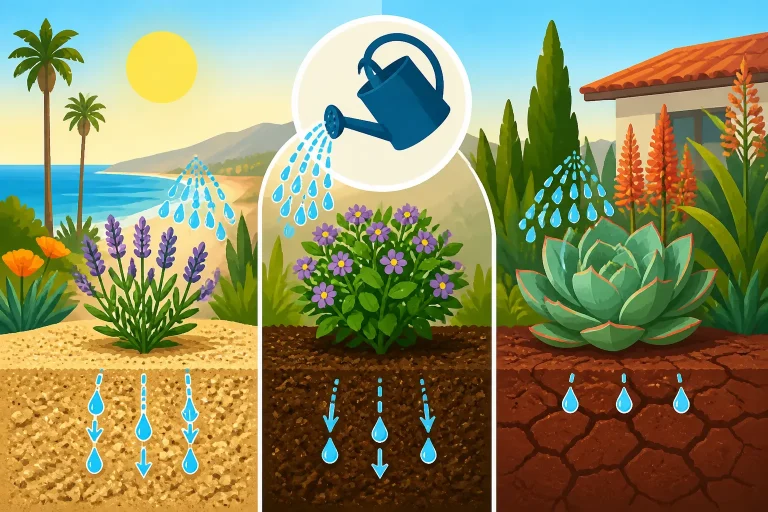
Clay soil contains very small particles that tend to fit closely together. Compared with coarse, sandy soil, water often enters and moves through clay more slowly. That does not mean every clay garden behaves the same way: soil structure, compaction, slope, organic matter, and buried layers all affect how quickly water soaks in and where it goes.
The surface can give misleading signals. A damp crust may form while moisture remains shallow, especially when water arrives faster than the soil can absorb it. In another bed, a dry-looking surface may sit over soil that is still moist at root depth. Either way, watering by appearance alone can lead to poor decisions.
Clay can also hold moisture for a long time. If the soil is already wet, adding more water may leave roots short of air and create conditions that stress plants. If the soil has dried and become hard or crusted, water may initially run across the surface rather than soaking in. Repeatedly extending a sprinkler cycle in response to runoff can make the problem worse.
The practical goal is not to keep clay continuously wet. It is to get water into the part of the soil where the plant’s active roots are, then allow conditions to change before irrigating again. What counts as an appropriate depth depends on the plant, its stage of establishment, the bed’s soil profile, and how quickly moisture is being used.
Think of “depth” as a result to check, not a timer setting to assume. After irrigation, inspect the soil below the surface in several places. If moisture is confined to a thin layer, the irrigation did not wet the profile evenly. If the soil is wet well below the active root area or stays saturated, the application may have been excessive, drainage may be restricted, or both.
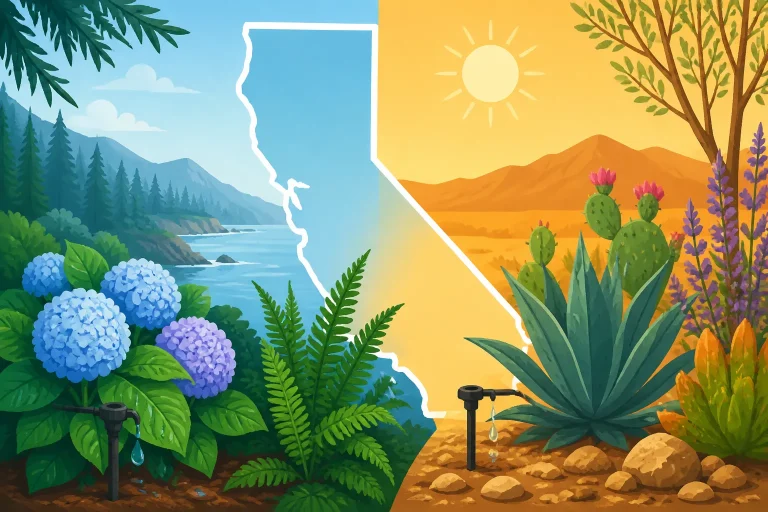
California gardens add more variation than a single statewide schedule can capture. A coastal bed, an exposed inland yard, and a shaded garden near a building can experience different wind, heat, and drying conditions. The USDA Agricultural Research Service notes that wind, soil type, soil moisture, humidity, pollution, snow, and winter sunshine can affect plant survival in addition to hardiness zone. For irrigation, that is a useful reminder to consider the site and its conditions, not just a regional calendar. Adapting Local Planting Calendars for Yard Microclimates can help explain why nearby gardens may need different timing.
Check moisture below the surface before changing a schedule
A timer tells you when a system ran; it does not tell you how much moisture reached the roots. Checking the soil gives you more useful information, especially when clay is involved.
After watering, look at more than one part of the bed. Soil can vary over a short distance because of foot traffic, previous digging, a compacted layer, a slope, or the location of an emitter. A single test near one plant may not represent the whole irrigation zone.
Use a small hand trowel or a narrow soil probe to inspect below the surface without disturbing major roots. Check near a plant’s active root area, but not directly against the stem or trunk. Compare a spot near the water source with another farther away. If the soil is sticky, glossy, or smears easily, it may be quite wet. If it crumbles into hard clods or feels dry through the inspected depth, moisture may not have reached far enough. Texture varies, so compare the soil with its own condition before and after irrigation rather than treating one feel as a universal standard.
A simple process helps make each adjustment more deliberate:
- Check the soil before watering. If it is still moist at the depth that matters for the plant, wait and reassess instead of running the system automatically.
- Run the irrigation system and watch the first part of the cycle. Look for puddles, water moving downhill, or water flowing into paths and drains.
- Pause the system if water begins to collect or run off. Give the surface time to absorb what it has received.
- Check soil moisture after the water has had time to move into the bed. Look for moisture at several points and at more than one depth.
- Adjust the next irrigation based on what you found. Change the cycle pattern, delivery method, or schedule one factor at a time so you can tell what helped.
This approach is more reliable than judging a bed by the color of its surface. It also helps separate different problems. Water that runs off quickly may indicate a delivery rate that is too fast for the surface, a slope, or compaction. Water that disappears from view but does not wet the root area may point to uneven distribution or a shallow application. Water that remains around roots for an extended period suggests that drainage or the amount applied deserves attention.
Keep an informal record of conditions rather than trying to follow a rigid calendar. Note whether the soil was dry or moist before watering, how the system performed, and what you found afterward. The aim is not paperwork; it is to spot a pattern. If the bed stays wet for a long time after irrigation, increasing run time is unlikely to solve a plant that looks stressed. If the top is damp but deeper soil is dry, a short surface application may be part of the issue.
For a broader comparison of how texture changes irrigation choices, see Matching California Garden Watering to Sand, Loam, and Heavy Clay. For general guidance on assessing water delivery and depth in different yards, Garden Irrigation Timing and Depth for California Yards is also relevant.
Apply water slowly and respond to runoff
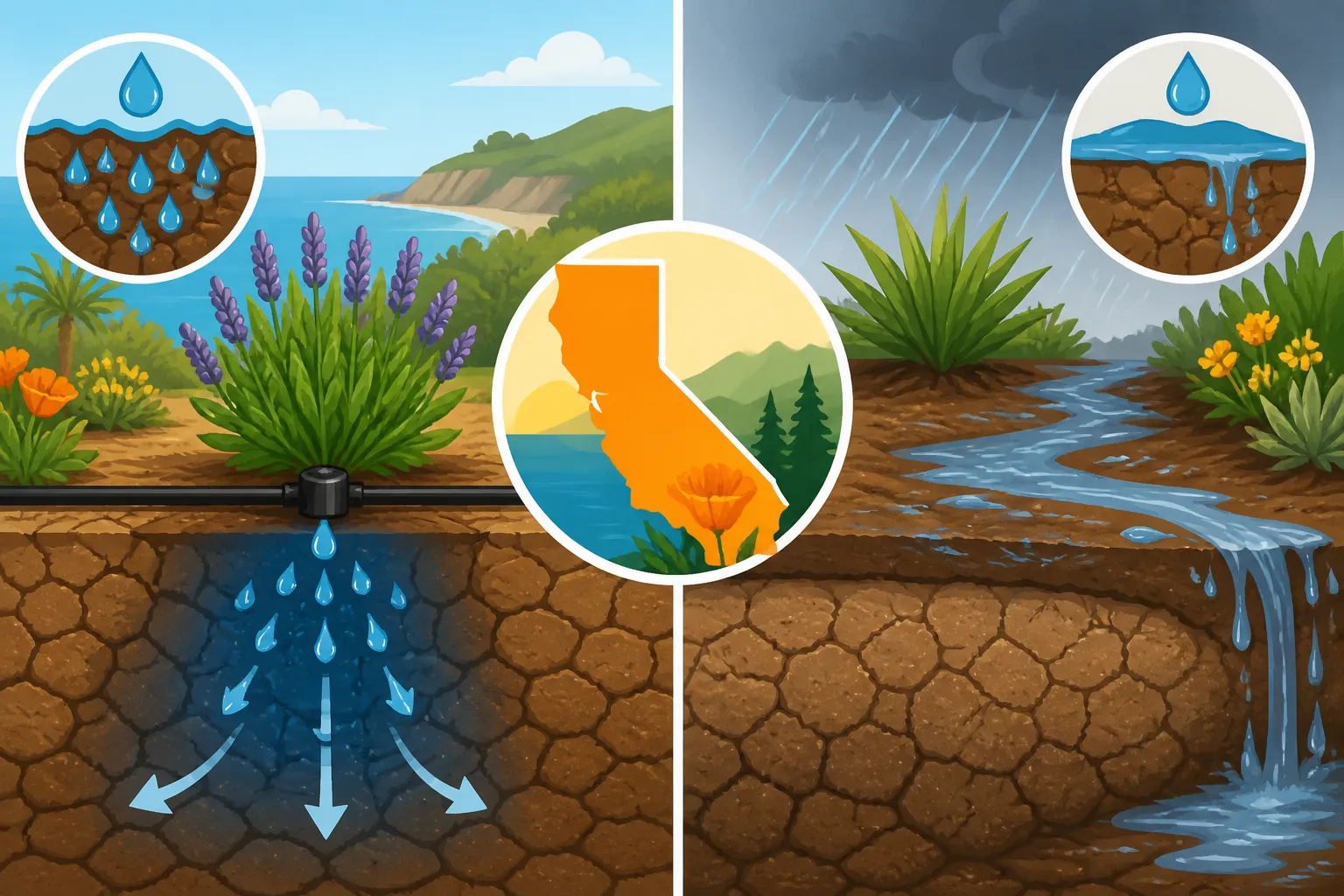
When water arrives faster than clay soil can absorb it, some may flow away before it reaches the roots. More time on the timer does not necessarily mean more useful water. If runoff is already happening, extending an uninterrupted cycle can send still more water off the bed.
Watch the ground while irrigation is running, particularly where a bed slopes, where soil is compacted, or where water is delivered by a sprinkler. If you see water collecting or moving across the surface, pause the system. Once the water has soaked in, a later cycle may be more effective than one long continuous run. The pause gives the surface time to take in water instead of forcing more onto ground that is already shedding it.
That does not mean every clay bed needs a particular number of cycles or a fixed pause. The right pattern depends on the soil, the slope, the system, the plant, and current moisture. Start by observing what happens, then make a modest adjustment and inspect the result. Avoid copying a timer setting from another yard unless you have confirmed that the soil and irrigation conditions are similar.
Delivery method matters too. A sprinkler may wet a broad area, but its application can exceed what a compacted or sloping surface absorbs. Drip irrigation can target plants more directly, but it is not automatically a cure for runoff or uneven wetting. An emitter may saturate a small spot while leaving nearby roots dry, particularly if soil structure restricts sideways movement. Check the wetted area rather than assuming that the presence of drip tubing means the whole root zone is receiving water.
If you use a timer, treat it as a control that needs occasional adjustment, not as proof that the soil is adequately watered. A setting that seemed suitable in one set of conditions may not fit after weather changes, plant growth, or soil disturbance. Inspect the area after changes to the system, and check again when plants begin showing unexpected stress. Adjusting California Drip Timers for Soil Texture and Roots focuses on matching drip irrigation to root areas and soil conditions.
Be careful about using frequent light sprinkling to compensate for runoff. It may wet only the surface, while the deeper root zone remains dry. Conversely, repeated watering before the soil has had a chance to drain can keep roots overly wet. The solution is to check where moisture is going and how long the soil remains wet, then adjust the pattern to address that specific issue.
For beds on a slope or with heavy, compacted soil, the surface may be the first place to show trouble. Watch for soil washing away, muddy water leaving the bed, or channels forming. Those signs mean water is moving across the ground rather than staying where plants can use it. A more gradual application, temporary pauses, or changes to how the water is directed may help. If runoff continues despite careful adjustments, look for compaction, a slope that concentrates flow, or a layout that sends water toward a path.
Reduce runoff without trapping excess moisture
Runoff is not only a sign that water is being wasted. It can carry soil away, expose roots, and leave some parts of a bed wet while others stay dry. In clay, the best response is to slow and direct water while preserving enough drainage for roots.
Start with the route water takes. Observe the bed during irrigation and after rain. Note whether water pools in a low point, follows a narrow channel, escapes across a path, or flows down a slope. These patterns identify where the problem starts. A puddle in one spot may indicate uneven grading or a low area; widespread puddling may point to slow infiltration, compaction, or a restricted layer beneath the surface.
Avoid walking or driving over wet beds when possible. Wet clay is particularly vulnerable to compaction, and compacted soil can leave fewer pathways for water and air. Working soil while it is wet can also smear its structure. If you need to dig or reshape an area, wait until the soil is workable rather than sticky and waterlogged.
Organic mulch can reduce direct exposure of the soil surface to sun and wind, soften the impact of irrigation, and help limit crusting. It does not repair compacted soil or guarantee that water reaches roots, so continue checking below the mulch. Keep mulch from piling against stems and trunks, and choose an approach suited to the plants in the bed. Mulching Garden Beds to Keep California Roots Cool in Heat discusses how mulch can support soil moisture management.
Avoid trying to solve every clay problem by adding material without understanding the bed. Different soils and garden uses call for different approaches, and a surface amendment may not change a compacted layer underneath. If water repeatedly ponds in the same place or disappears into a narrow crack without wetting surrounding soil, investigate the soil profile and the irrigation layout before making broad changes.
A raised or edged bed can change where water stays, but it can also redirect water toward another part of the yard. Observe the flow after installation or landscaping changes. Do not assume that a border automatically prevents runoff; water can still cross an edge, escape through a low point, or collect inside the bed.
If your yard includes heavy adobe clay, the way water ponds and drains may deserve particular attention. Preventing Water Pooling and Runoff in Heavy Adobe Clay covers that issue in more detail. For general seasonal irrigation decisions across dry periods, see Managing Garden Irrigation Across Dry California Summers.
Adjust irrigation as plants and conditions change
A watering pattern should fit the plant as well as the soil. A newly planted shrub, an established perennial, and a shallow-rooted vegetable crop do not necessarily use water in the same way. Their root distribution, planting location, and tolerance of dry or wet soil differ. Even plants next to each other may need separate irrigation zones if their water needs are not alike.
When planting or moving a plant, pay attention to the soil around its root ball. The surrounding clay and the soil in a nursery container can differ in texture, so water may move differently at their boundary. Check both the root ball and adjacent soil rather than assuming one is a reliable indicator for the other. The goal is to keep the new roots connected to moist surrounding soil without leaving them waterlogged.
Seasonal changes also affect how quickly beds dry. Longer periods of heat, wind, or sun exposure can increase moisture loss, while cooler or cloudy conditions may leave the soil wet longer. Rain can add water unevenly, especially under eaves, tree canopies, and other sheltered spots. After a weather change, inspect the bed rather than making a calendar-based adjustment automatically. When to Resume Garden Irrigation in Spring Across California addresses how to reassess irrigation as conditions shift.
Planting dates and irrigation are connected, but a regional planting calendar cannot tell you exactly how wet an individual bed is. Local shade, wind exposure, slope, and soil condition matter. A new planting may need closer observation than an established bed, while a mature plant can still be stressed by poor drainage or uneven watering. California Sowing and Transplanting Calendar by Region can help with broader timing, while soil checks guide the water decisions at the planting site.
Watch the plants, but do not diagnose every wilted leaf as drought. A plant can look stressed when the soil is too wet, when roots are damaged, or when conditions above ground are demanding more than the roots can supply. If a plant looks wilted, check the soil before watering again. Adding water to already saturated clay can intensify the problem rather than relieve it.
A useful way to troubleshoot is to connect the symptom to a soil check:
- If plants wilt and the soil is dry below the surface, water may not be reaching the active roots.
- If plants wilt while the soil is wet or sticky, consider poor drainage, overwatering, or root stress before adding more water.
- If only one side of a bed looks dry, check whether the irrigation pattern reaches that area.
- If water repeatedly runs off, observe the delivery rate and surface condition before increasing the total run time.
- If one plant struggles while nearby plants do well, compare its root area, planting conditions, and irrigation exposure with the rest of the bed.
This kind of troubleshooting is more useful than changing several things at once. If you alter the schedule, delivery method, and bed layout together, it becomes difficult to know which change helped. Make a targeted adjustment, inspect the soil afterward, and watch how the bed responds.
Frequently Asked Questions
Should clay soil be watered less often than sandy soil?
Clay often holds moisture longer than sandy soil, but that alone does not determine when to irrigate. Check moisture at the depth relevant to the plant and account for drainage, compaction, weather, and root development.
Why does water run off when the soil is dry?
A dry or crusted surface, compaction, a slope, or a delivery rate that exceeds infiltration can all contribute. Pause irrigation when water begins to flow across the surface, then reassess how it enters the soil.
Is drip irrigation always better for clay?
Not automatically. Drip can direct water toward plants, but an emitter may wet only a small area or leave roots beyond that area dry. Inspect the wetted soil and adjust the layout or schedule based on what you find.
How can I tell whether a plant needs more water?
Check the soil before adding water. Dry soil near the active roots can support a decision to irrigate; wet, sticky soil suggests that more water may not help and that drainage or root stress should be considered.
Sources
- USDA Agricultural Research Service — How to Use the Maps | USDA Plant Hardiness Zone Map (checked November 14, 2026)
Disclaimer
This article is for general informational purposes only and does not constitute professional advice. Laws, prices and regulations vary by location and change over time. Consult a qualified professional for guidance on your specific situation. California Gardening Guide is not a government agency and is not affiliated with any university extension, state department of agriculture or other government agency.